


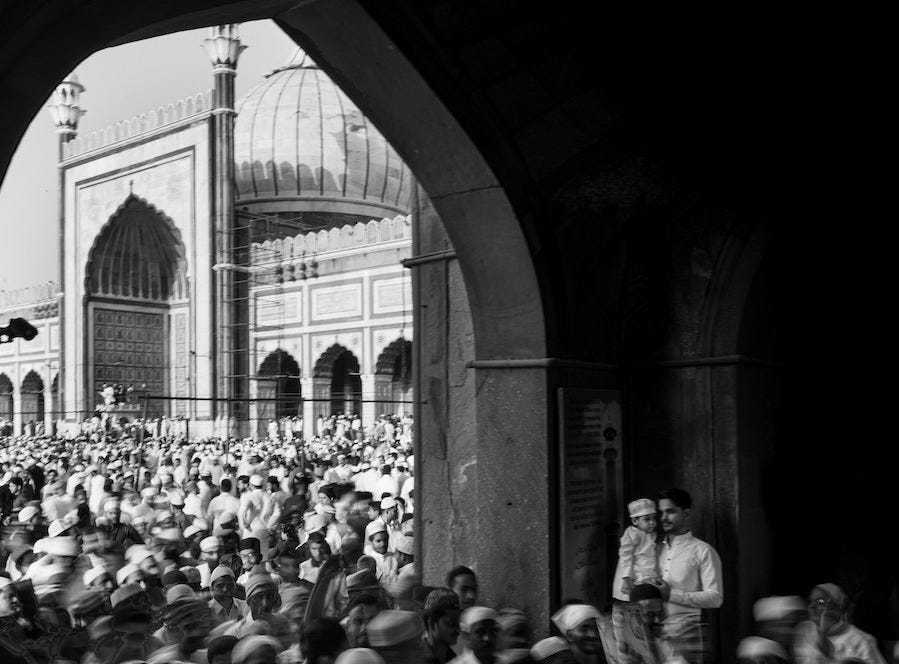
Cardinal George Jacob Koovakad, Prefect of the Dicastry for Interreligious Dialogue, Vatican, expressed his “closeness, solidarity and respect” in a message to “Muslim brothers and sisters” ahead of Eid Al-Fitr, the closing of Ramadan. In his message, the cardinal said, “This year, through a providential convergence of calendars, Christians observe their period of fasting and devotion alongside you during the holy season of Lent, which leads the Church toward the celebration of Easter. During this spiritually intense period, we seek to follow God’s will more faithfully.” Moreover, he called upon Christians and Muslims, together with all people of goodwill, “to imagine and to open new paths by which life may be renewed” and said that “this renewal is made possible through a creativity nourished by prayer and the discipline of fasting that clears our inner vision and concrete acts of charity.”
He conveyed his sense of spiritual closeness with Muslims, especially with those “who struggle or suffer in body or spirit because of their thirst for justice, equality, dignity and freedom.” He affirmed in his message that the Catholic Church stands in solidarity with all who thirst for justice, peace, and harmony and said: “We are united not only by our shared experience of trial but also by the sacred task of restoring peace to our broken world.” The cardinal noted that peace is a gift from God and that it is nurtured by defusing hostility through dialogue, practicing justice, and expressing forgiveness. He expressed his desire that through the shared season of Ramadan and Lent, Christians and Muslims would experience inner transformation and become a catalyst for a renewed world where the weapons of war give way to the courage of peace.
The spirit of his message is rooted in the spirit of the document issued by Second Vatican Council in 1965 entitled Nostra Aetate (On the Church’s Relation to Non-Christian Religions). Nostra Aetate clearly states that “the Church rejects nothing true and holy in (other) religions” and promotes interreligious dialogue. While addressing Islam, the document expresses the church’s “esteem” for Muslims and identifies several commonalities that Islam and Christianity share in common, including belief in Almighty God who is merciful Creator and Revealer. It also mentions other beliefs shared by Christians and Muslims, such as convictions regarding judgment and the resurrection of the body; similar practices such as prayer, fasting, and almsgiving; and the veneration of certain figures, including Mary. The document concludes with an appeal for dialogue and collaboration with Muslims on issues of peace and social justice.
Since Christianity and Islam are the two largest global religions, it is particularly important for Christians and Muslims to heed this call for cooperation in pursuit of the common good of all humanity. In the spirit of Nostra Aetate, Christians join their Muslim brothers and sisters as they engage in fasting, live out a profound commitment to prayer, and practice almsgiving. Together with Muslim brothers and sisters, Christians also share values such as patience, gratitude, compassion, and humility.
During Ramadan, Muslims often welcome Christians and others to come together during Iftar (the breaking of the fast) and Eid al-Fitr (the festival days). Such gatherings help to dispel misconceptions and they foster friendship and trust. Moreover, the festival days serve as an opportunity for Christians and Muslims to develop good relations with each other that will result in mutual understanding.
We join our Muslim brothers and sisters during the occasion of Eid al-Fitr to praise and thank Almighty God and to strengthen the bonds of respect that lead to collaboration for the common good. Especially during these days, we join our Muslim brothers and sisters in praying for peace throughout the world. ♦
Joseph Victor Edwin, SJ, is coordinator of Jesuits Among Muslims in Asia (JAMIA) and secretary of the Islamic Studies Association (ISA) at the Vidyajyoti Institute of Religious Studies in New Delhi, India.