


Scroll down for our latest offerings this week, including:
Our latest podcast with Br. Mark D’Alessio of the Companions of Francis and Clare
Plus upcoming events of interest
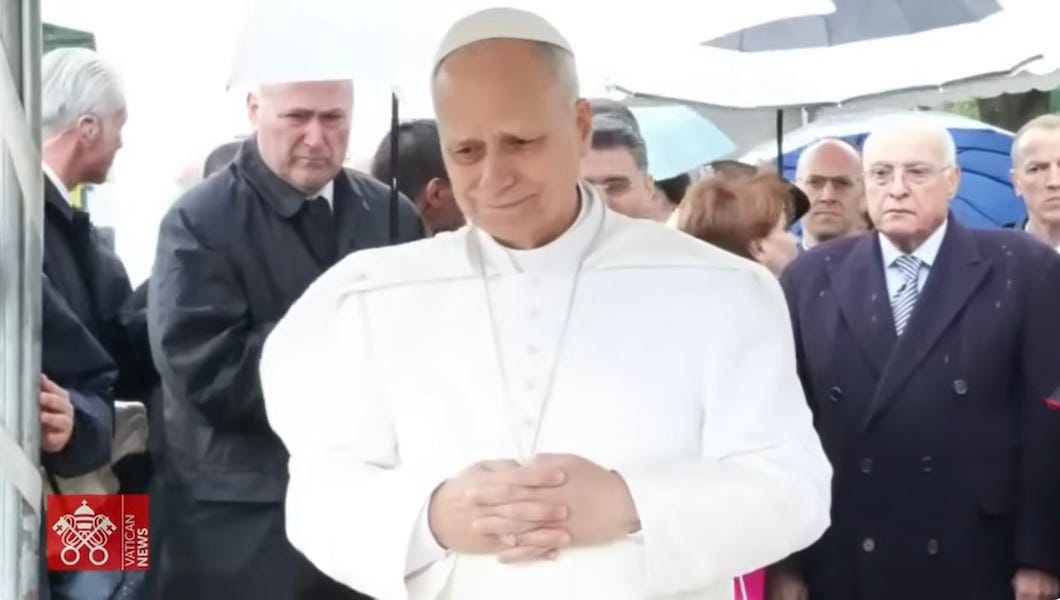
Readers of this publication will likely be aware of the events of the past week that have seemed to pit a US administration embroiled in conflict in Iran against a pope who is trying to call the world back to the roots of gospel peace. There were the president’s online taunts, the posting of a slanderous and sacrilegious image of him as a Christ figure, the doubling down even after Catholics and others of good will of all political persuasions called on him to stop.
To understand this president requires more than just political analysis; it needs to account for the movement over the past 60 years from civic life to spectacle. The televised Kennedy-Nixon debates of 1960 are often cited as the seed of this era, when mass media presence became a factor of electability alongside policy prescriptions and personal experience. The Vietnam War fought in that decade became known as the “Living Room War” because Americans, for the first time, experienced images of it nightly beamed into their homes. This was repeated with the Gulf War in the early 1990s, and it reached a dark apotheosis in our hyper-mediated age with the White House’s social media postings that intercut footage of real-life bombings in Iran with clips from action movies and video games.
Policy that flows out of such a simulated view of the world is dehumanizing and dangerous. It has been said that America wants the benefits of empire without the responsibility—we are ill-equipped at nation-building, and we don’t bother to learn the languages, cultures, and history of the countries we purport to save. Now, it seems, we don’t even want the responsibility of critical thought or oversight of our civilian-controlled military. The White House has asked for $1.5 trillion in defense spending for the next fiscal year, and the number is as abstract and unreal to us as the images of war we scroll through on our phones. Meanwhile, we are told that funding for healthcare, child care, clean energy, housing, and other investments in our shared American project simply aren’t available.
Against this, Pope Leo offered this week a different approach—one focused on encounter and dialogue, on an embodied rather than a simulated vision of reality. In his travels through Africa, first in Algeria and then to Cameroon (and on to Angola and Equatorial Guinea over the next several days), he has graciously deflected the president’s attacks that were made through the distancing mechanisms of social media with real-life, spoken words articulating the essence of the gospel. He has visited nursing homes and orphanages and hospitals, places where the aftershocks of global inequality are not experienced as data points but in human faces, human lives. “God’s heart is torn apart by wars, violence, injustice and lies,” he told those gathered at the “Ma Maison” Care Home for the Elderly in Annaba, Algeria, on Tuesday. In remarks given an interfaith meeting for peace at the Cathedral of Saint Joseph in Bamenda, Cameroon, on Thursday, he struck an even more prophetic tone that is worth quoting at length:
The masters of war pretend not to know that it takes only a moment to destroy, yet a lifetime is often not enough to rebuild. They turn a blind eye to the fact that billions of dollars are spent on killing and devastation, yet the resources needed for healing, education and restoration are nowhere to be found. Those who rob your land of its resources generally invest much of the profit in weapons, thus perpetuating an endless cycle of destabilization and death. It is a world turned upside down, an exploitation of God’s creation that must be denounced and rejected by every honest conscience. We must make a decisive change of course—a true conversion—that will lead us in the opposite direction, onto a sustainable path rich in human fraternity.
The same Tuesday that Pope Leo was visiting the archaeological site of Hippo to pray amid the ancient presence of his spiritual lodestar Saint Augustine, US vice president and Catholic convert J. D. Vance cautioned him to “be careful when he talks about theology.” This came a day after Vance told Leo in a television interview to “stick to matters of morality,” as if the issues of war and peace and the “exploitation of God’s creation” that have been at the center of the pope’s intentions were not themselves matters of supreme moral consequence. It was a curious thing to hear from a Catholic who places as much emphasis on the historical continuity of the church as Vance does; obedience to the pope as guardian of the faith is what sustains and supports this continuity. It may be that the American-born pope with the soul of a Peruvian missionary is bringing into sharp relief the distinction between Catholic traditionalism—the romanticization of the past, faith as a cultural or aesthetic commitment that can be held a distance and easily manipulated—and the depths of Catholic Christian tradition that lays claim to us in mystery and reorients our prayer, our heart, our life.
Michael Centore
Editor, Tomorrow’s American Catholic
Hatching Open the Heart
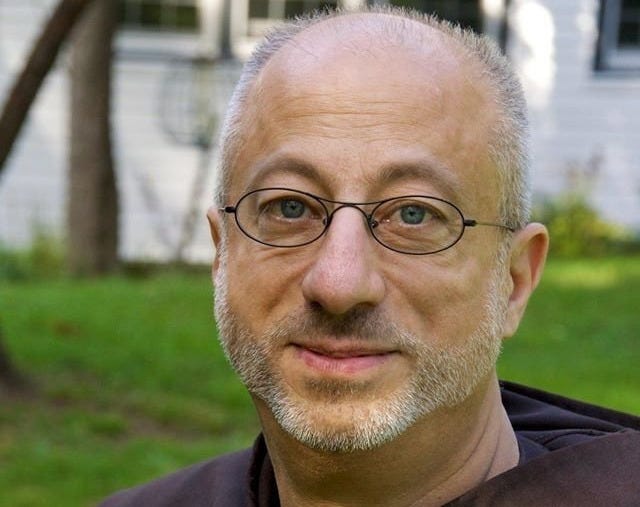
The Rt. Rev. Br. Mark D’Alessio is a Franciscan friar and the founder of the interfaith community of the Companions of Francis and Clare. He is also a spiritual director, Christian bishop and priest, ordained lay Buddhist minister, chaplain, retreat leader, author, crisis counselor for the homeless, and past president and executive director of the Psychotherapy & Spirituality Institute, which draws together the inspiration of the church with the wisdom of psychological care.
In the latest episode of our podcast, we speak with Br. Mark about the turning points in his spiritual journey, including the moment when he realized it was permitted to “ask any question you want of God”; his interfaith ministry and experience of Buddhism in a Christian context as “a different practice for the same spiritual muscle”; and the origins of the Franciscan Circle and Companions of Francis and Clare. Along the way, Br. Mark shares insights into how “God works through invitation,” the relationship between conversion and compassion (and how compassion is the ultimate sign of personal transformation), the distinction between joy and happiness, and other stages in “the mission of understanding the mystery.”
Listen here »
Human After All

Richard Lehan on the contemplative approach to AI: “The specter of an AI-dominated world can generate an existential angst about our future. What’s needed is a proper understanding from a human perspective of the nature and role of AI in our collective and personal lives. A good starting point is reminding ourselves of what separates humans from AI. A white paper issued by the Vatican under Pope Francis in 2025 titled Antiqua Et Nova (‘Old and New’) has been a helpful resource for me. Subtitled ‘Note on the Relationship Between Artificial Intelligence and Human Intelligence,’ Antiqua Et Nova is a spiritual primer on what AI is and isn’t, and a call for discernment and action.”
Read more »
“Cycle” and “Flavors”
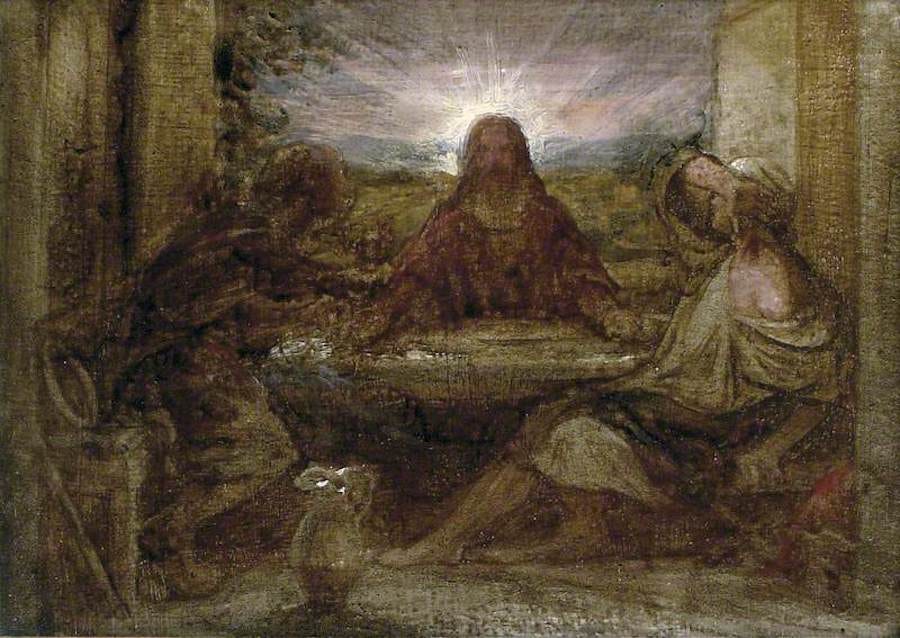
Maryanne Hannan shares two new poems rooted in the Psalms: “Taste and taste and taste. / Relish the way // you eat; are consumed, / a full mouth having room // for more, the alchemy of sweet. . . .”
Read more »
Notes and Events
On April 28, unions and allies observe Workers Memorial Day. The Catholic Labor Network (CLN) is supporting local Masses in (arch)dioceses across the country to honor and remember all who have died on the job in the last year. Further information on how to join or organize a Mass is available here.
The CLN is also hosting an interactive panel and discussion for the Vigil of the Feast of St. Joseph the Worker on April 30 at 7:30pmET. “During this 75 minute event, we will ground ourselves in prayer and a theological ethic of work, as we engage labor history in the United States and explore opportunities for action to meet the signs of the times,” they write. Information and registration is available here.
On April 23 at 3:00pmET (8:00 p.m. London time) the UK-based organization Root & Branch Synod is hosting “Animals, Laudato Si’, and the Call of Creation” with Fr. Terry Martin. Fr. Martin’s presentation will center on the question: “Does our faith demand a more radical kind of kindness toward the creatures we share the earth with?” Information and registration is available here.
Join the Center for Christogenesis on Monday, May 4, at 7:00pmET for a film screening with Thomas Jay Oord. This free online event includes a screening of Seer followed by live Q&A with Thomas Jay Oord—photographer, filmmaker, and theologian. Together, participants will explore love, nature, spirituality, and the questions that arise when we learn to see more deeply. Information and registration is available here.
And again from last week’s newsletter, don’t forget about Solidarity Hall’s community reading of Dante’s Purgatorio on Tuesdays from 2:00 to 3:30pmET, starting May 5 (a full itinerary for the 10 sessions as well as registration information can be found here) and the a 90-minute online gathering of women and priests sponsored by the Association of US Catholic Priests (AUSCP) Women in the Church Working Group this Wednesday, April 22 at 1:00pmET.