


If we look closely at the timeline of American history, we find that, since 1776, over 90 percent of our nearly 250-year project has been marked by involvement in war. I’m not sure if any other nation today can make that claim.
America came into existence as a consequence of war. But what explains this extreme tendency to repeatedly engage in war? It would be comforting to believe that there is a rational explanation, that there is a good reason for engaging in warfare again and again and again. There is, but it’s not what we were taught in school.
As a nation, we are saturated in a collective trauma that we have never adequately addressed. The news of what our country is doing to its own people and to people in other parts of the world horrifies us. We are exposed to such news around the clock. Mere awareness of these events hammer at our souls, and they hammer at the collective American soul. At some level, the American people know that domination, cruelty, destruction, and corruption are wrong and unacceptable. I believe this is true even for those who support the wars America wages and the oppression of people living within and beyond its borders. No individual or nation is immune to moral injury.
When we speak of this trauma, we are speaking of a national moral injury, and when we speak of moral injury, we are dealing with shame. Shame is at the center of traumatic injury, whether we are processing it individually or collectively. It takes the form of an emotional story we create to attribute meaning to our experience. Shame becomes the compelling narrative of our inherent “badness” that is so painful that we go to great lengths to conceal it from others and, as much as possible, from ourselves.
Shame insists that a person or group is the problem. Attempting to claim the moral high ground, we decry poor behavior as “shameless” and we exclaim “Have you no shame?” to those behaving reprehensibly—as if having a sufficient quantity of shame would redirect their actions back within morally acceptable parameters.
Shame has been tragically misunderstood as a kind of virtuous, corrective energy. It isn’t. Often confused with appropriate guilt, shame is an emotional indictment of who we are. By contrast, appropriate guilt is the energy of moral course-correction that guides us back to living in accordance with our values. Think of it as our organic GPS system. Guilt informs us that we have made a mistake, while shame informs us that we are a mistake. If my very existence is labeled a mistake, where is there to go? Literally nowhere.
Shame is corrosive, not corrective. In fact, research indicates that shame is highly correlated with expressions of violence. The actual experience of shame is one of internal torture. This is precisely why people and nations will go to such incredible, even outrageous lengths to escape feelings of shame.
The Origins of Trauma
America’s collective trauma is partly a result of what was done to us. The European settlers who colonized what we now know as North America were themselves a traumatized group of people attempting to escape various forms of oppression in Europe. They risked much in undertaking perilous journeys across the Atlantic Ocean. Some didn’t survive. Many died soon after arriving in the “New World.” They brought their collective trauma with them.
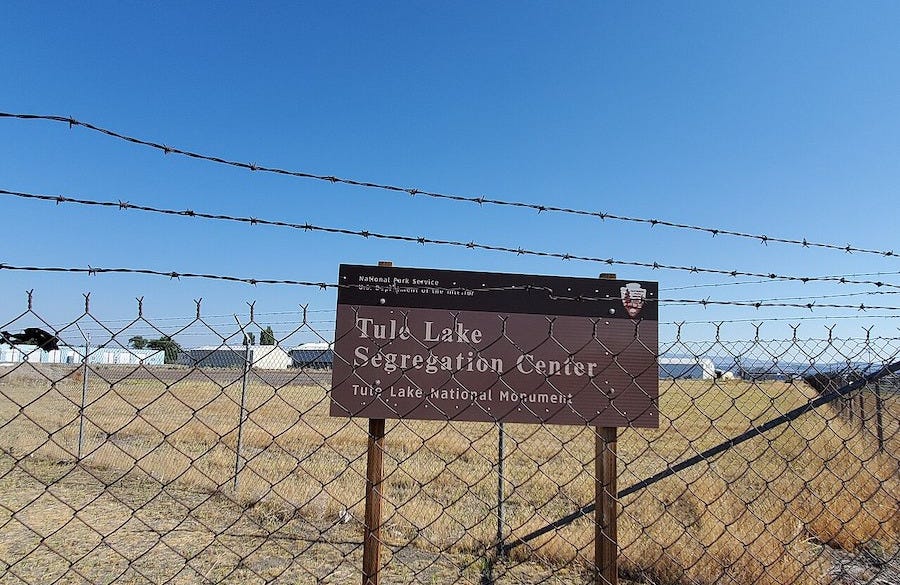
We have also traumatized ourselves by our long history of perpetration. The early settlers who colonized this land traumatized themselves as they dehumanized and brutalized the indigenous people already living on this continent. Those colonists traumatized themselves further by doing the same thing to the people abducted from Africa, who were enslaved and used as beasts of burden to provide a more comfortable life for those who presumed to own them. After the Japanese military attacked Pearl Harbor in 1941, we imprisoned thousands of Japanese Americans in internment camps simply because they were Japanese Americans. This kind of vicious inequality and oppression became the pattern for American life, emerging in the Jim Crow period of the 20th century and the bigotry towards Muslims in the 21st.
We are traumatized by how we are imposed upon by others and by how we impose ourselves on others. We experience the shame of being dehumanized and the shame of dehumanizing others. Reaching a critical mass of internal shame—or, worse, public humiliation—we become highly susceptible to violent behavior as an escape from this unbearable pain.
How have we tried to manage our collective trauma? We have manufactured sanitized stories that promote mythologies of greatness and virtue. We escape into highly materialistic lifestyles that we regard as the evidence of how good we are. We obscure or minimize those aspects of our nation’s history that are shameful. Instead, we tell ourselves that God favors us and is on our side. We proclaim American exceptionalism. It worked for us until it couldn’t, because it came at such a high moral cost. Portions of America’s soul were required for the Faustian bargain we didn’t know we were making.
States of Denial
What lengths have we Americans gone to in order to escape our collective trauma? Whether we consciously admit it or not, there is an inner awareness that we have acted in ways that are significant betrayals of our morality. Eventually, very painful truths break through and enter our collective awareness. We learn of war crimes like the fire bombings of Hamburg, Dresden, and Tokyo in World War II and the My Lai massacre in Vietnam that were perpetrated by the US military. Incidents of vicious racism like the Wilmington Coup of 1898 and the Tulsa massacre of 1921 seep into public awareness and illuminate the ugliness of white supremacy in America. The American government’s complicity in the slaughter of Palestinians in Gaza is a current example of this moral betrayal.
Becoming traumatized by harming others may seem like a strange concept to some. Many active military personnel and veterans will confirm how real and devastating it is. The extent to which we subscribe to the illusion of separateness between ourselves and others is the degree to which we are blind to how we injure ourselves by injuring others. The reality of our deep interconnectedness is a matter of scientific fact. Yet it is a highly problematic fact for those invested in maintaining the political and economic status quo which maintains the privileges of a select few.
Sadly, our politicians are collectively and perhaps willfully in denial of perpetration-induced trauma, as are the powerful corporations that dominate our government. Out of this state of denial, our political and economic systems continue to inflict serious injuries to our individual and collective integrity. They wound our humanity.
This denial makes war inevitable. State-sanctioned mass murder is established as a viable and all too often preferred method of getting what is desired by both political and economic power structures. It is very lucrative for the few and obscenely costly to the many. The normalization of war is the result of conditioned ignorance. The glorification of war is pathological. The conflation of war with anything holy is blasphemous.
Yet the reality of war persists. When nothing else works for us to control the torturous shame we have internalized, war is our “break glass in case of emergency” option. When all else fails, we go to war to distract ourselves from the agony of our shame.
The Work of Healing
The purpose of pointing out the low points of American history is not to promote a sense of national shame. Despite the current attempt to re-engineer public education to “protect” students from history that might make uncomfortable (to protect “white fragility,” some might contend), it is just the opposite. We are already immersed in an atmosphere of collective trauma that is so familiar to us that it feels normal. We are like fish swimming in water and not realizing that we are wet.
The point of reckoning with our collective injuries and the perpetration of serious injuries to others is that a deep and rigorous honesty is the only way out of this toxic cycle. Such honesty is the exit ramp for us to do the necessary work of healing so that we can emerge from the torture chamber of our collective trauma. We need to stop pretending that we can fight our way out of this torture chamber. We can’t. We keep trying the main the feelgood stories of our collective ego, perhaps fearing the pain of letting them go. We confuse honest humility with the shame we fear so much, and this confusion keeps us trapped in our own fiction.
Like a recovering alcoholic, America needs to make amends to all whom it has harmed, which must include tangible reparations to the fullest extent possible. We must humbly ask for forgiveness and accept whether it is given or not. A hollow “celebrity apology” will accomplish nothing.
America needs its own version of a Truth and Reconciliation process. We need to take long and serious look in the mirror and stop pretending that we’re always right and always superior. “My country right or wrong” needs to be retired and finally recognized as an obsolete stance. Our national ego needs deflation. No more fantasies about superiority. Then we will be able to heal from our trauma and start telling ourselves a new and honest story of who we are: a people who prioritize love over domination and a nation that genuinely respects all of its inhabitants and all those living throughout the world. ♦
Paul Nyklicek is a husband and a father. He works in Farmington, Connecticut, as a psychotherapist and is an associate member of Veterans for Peace.