


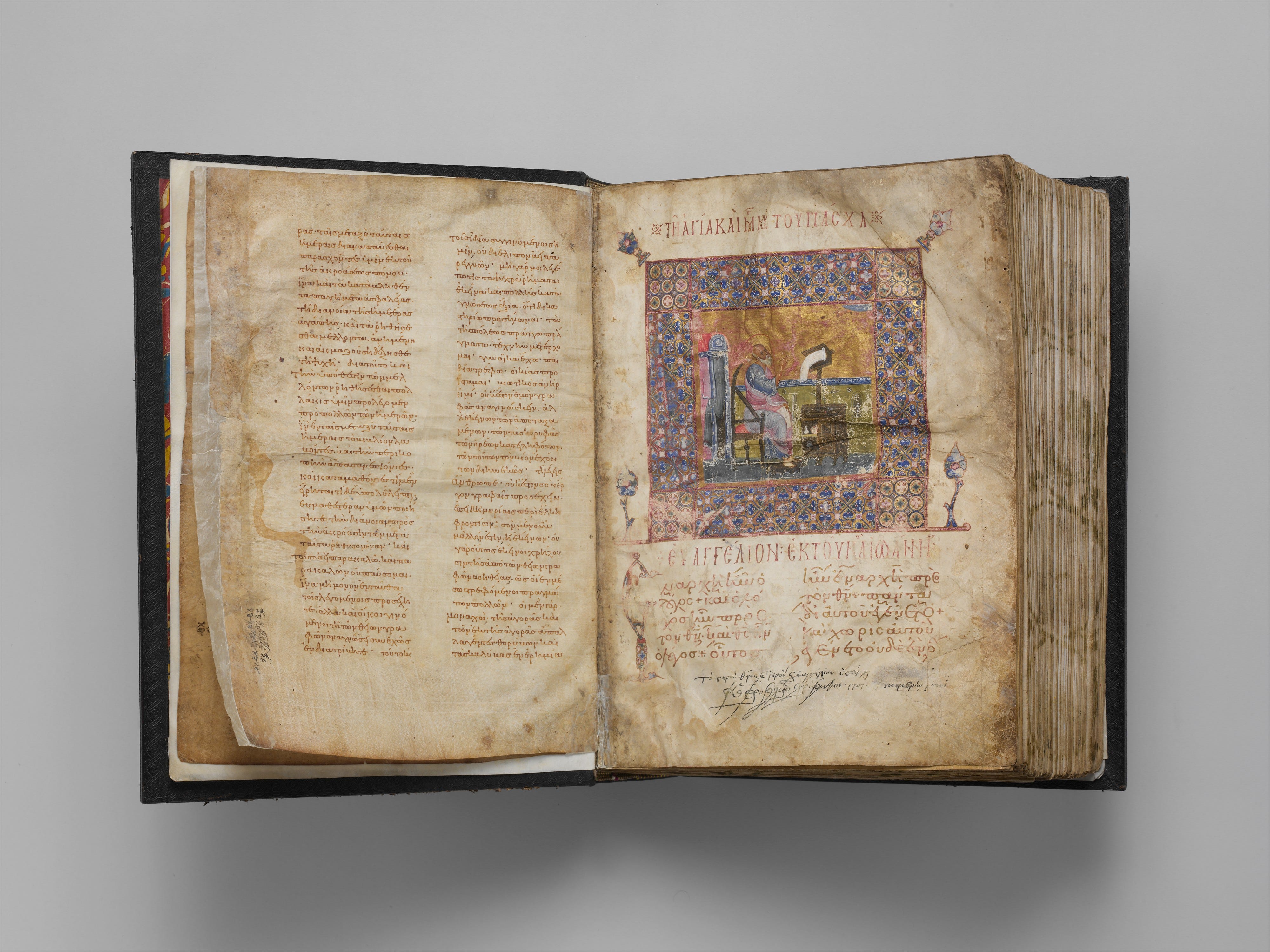
I would like to share some tips that I hope will give others much-improved insights into the New Testament. I’m not a priest or theologian, just a lay Catholic with many years of experience gradually gaining knowledge of Jesus and his times. I took rigorous biblical redaction courses at the University of Illinois several decades ago, but I mostly studied biology and chemistry in college. In recent decades I’ve read many books about biblical research and, more recently, watched countless lectures online given by recognized Bible scholars.
Like most 20th-century Catholic families in the United States, my family never read the Bible at home, though we attended Mass each week and on all holy days. We listened passively to the three Scripture readings each Sunday. They were brief extracts from widely scattered texts in the Old and New Testaments, and though the five-minute homily usually dealt with a religious point made in the gospel, there was no real mention of when a text was written, for which audience, or why it was written in a particular manner. Still today, the Mass readings are short and from widely scattered sections of the Bible. These cycle over a three-year period designated A, B, and C, and these cherry-picked passages represent a tiny fraction of what’s in the Bible. There is never the insight that would be provided by reading completely a full letter by Paul or a full gospel. We just hear brief passages out of context.
I never participated in serious scholarly discussions about the texts until those courses in college. The professor required that class members read several textbooks during those months while referring to a specific scholarly edition of the Bible that each student purchased. We used the Oxford annotated Bible, and this was eye-opening. In the front was a brief but thorough explanation about the construction and structure of the Bible and how the English translations were made. Each book of the Bible had a short scholarly introduction explaining what was known about the author, origin, and context of that book. Importantly, extensive detailed footnotes to verses were provided on nearly every page, and these were highly informative.
Many Tomorrow’s American Catholic readers likely have Catholic Bibles or other sorts of modern editions, and that is fine. But if you really want a deeper and much more instructive experience, I suggest you get an Oxford annotated Bible. My advice would be to stay away from scholarly textbooks for now as the material can be technical and difficult.
The Bible is not a book. It is a library of many books written by different people over a long period. Nearly all Catholics know this, of course, but it is important to realize that the many authors had many different and often conflicting points of view. Some people worry when they see contradictions among the gospels, for example, but there should be no concern about trying to align the accounts so that they agree. The different writers are telling important religious tales written in various times and places using different sources, often based on decades of oral tradition before anything about Jesus was ever written down.
I was amused as a teenager when I first heard of a “red-letter Bible” in which verses that are spoken by Jesus are printed in red. One should recall that Jesus spoke in Aramaic and likely knew only a few words or phrases in Greek. The Gospel of Mark was written likely just before 70 AD and was composed in koine Greek (an ancient type of Greek) by a well-educated and sophisticated person not likely living in Palestine. That gospel, which is short, has been described as a passion narrative with a brief introduction. The sources of the material apparently were almost entirely oral traditions that had circulated for decades. I mention this not to minimize the importance of the words of Jesus as recorded, but to emphasize that except for perhaps a few short phrases (as in the Lord’s Prayer), these words of Jesus likely capture well only his intent, not his exact wording.
In one gospel, for example, Jesus is quoted as saying that married couples should not divorce, though in another gospel he says not to divorce unless there has been adultery. (Note that culturally in the first century, adultery was often not believed to be a serious personal failing but instead was an afront to the paternal family system in which marriages were negotiated and a price was usually paid for the bride. Men generally were never punished for adultery, but a woman had insulted her family and could be punished. Also, as an aside, a man who had sex with an unmarried young woman was seriously affecting her cultural acceptability as a potential bride; the man generally had no consequences except that the family might insist that he pay the bride’s price.) Note that Christians had initially believed that the end was coming soon, perhaps in a few months, so it was advised that if a person was single, he might not take the trouble to marry, and it didn’t matter short-term if a person was a slave or free. Since the kingdom was about to come, oral tradition was adequate.
The gospels of Luke and Matthew were written later, perhaps between 70 and 90 AD. They both used Mark as a guide as well as possible sayings of Jesus from another source that scholars call Q, which has been lost. Again, Luke and Matthew were composed in sophisticated koine Greek. It’s not clear if the two authors had ever seen each other’s writings, or if they had ever seen the letters of Paul, which are much earlier. By the 90s, Jesus’s origins and place in history were becoming more important to Christians, so “Christmas narratives” were added, as well as stating Jesus’s ancestry, though one gospel emphasizes Mary and the other Joseph as the relevant parent (again reflecting the paternalistic culture), and one gospel even traces ancestors all the way back to Adam. The Gospel of John is later still and depicts Jesus as being very God-like and knowing much about the future, even remaining “in control” during his passion. In contrast, in Mark, Jesus is hesitant at first to let people know that he is the Messiah, and he may believe that he has died a failure since his only words during his execution are, “My God, my God, why have you forsaken me?”
The latter point is important: the four gospels have very different perspectives. They are narratives shaped by authors who have religious ideas in mind, and each gospel is valuable. This is why each gospel should be read all the way through, just like a novel, to understand that author’s view. Having a few paragraphs read to us at Mass, one week or two weeks from one gospel, and then other weeks from other gospels, loses each author’s intent. I once heard a radio broadcast about the “seven last sayings of Jesus” during his passion, as though Jesus had said all these words sequentially during the crucifixion. In fact, the radio preacher had amalgamated these seven sayings from the four gospels, creating a novel “mongrel gospel.”
The Bible is a vital source of information for Christians, and it is not legitimate to blend the separate gospels as we wish just to create our own mixed-up gospel. For example, in Mark, Jesus is suffering and silent during the passion except the one statement when he dies. In John, Jesus has several sayings and seems to be in control as he dies as a ransom for many. These are not contradictions. They are different narratives to make important religious points. In the Synoptic Gospels (Mark, Luke, and Matthew), there is a Last Supper to celebrate Passover followed the next day by the crucifixion. This differs from John because that author wanted to emphasize that Jesus was killed on the Day of Preparation (the day before the meal is celebrated), which was the time when the innocent lambs are sacrificed to serve as the meal. In consequence, there is no Last Supper in John, though there is a different episode in which Jesus humbly washes the feet of his disciples to show that our role should be that of servants to others.
As mentioned, Paul’s epistles are much earlier than the gospels. Keep in mind that when Paul is quoted saying that he is spreading the gospel, he means the “good news” based on oral traditions—the written gospels do not yet exist. Paul is thought to have been killed by 64–67 AD. He has also had a vision of Jesus, but he never bothers to describe it, and he gives almost no sayings of Jesus. Paul’s message is not “from Jesus” but rather “about Jesus.” The thirteen letters that are attributed to Paul are all that survive, although he likely wrote a hundred letters or more to his churches over the years.
Paul was among the early Christians who were confused by the death of the Messiah and reasoned what it must mean. (Speaking religiously, they were inspired by the Holy Spirit to make sense of Jesus.) Paul came up with two theories, and in his letters he switches back and forth effortlessly between these. Modern readers may not even notice that Paul is switching back and forth between these ideas. For modern Catholics, these have become a sort of blended idea. Either the death of Jesus was a price that had to be paid as a ransom because of Adam’s sin (atonement), or the death of Jesus somehow overcame the evil power that was ravaging the Earth, causing sin and the death of humans (overcoming evil). I should note that the atonement concept was favored by three of the gospel writers, but not by Luke. Luke has expunged any mention of atonement from his gospel, though one phrase during the Last Supper (“a ransom for many”) is thought by scholars to be a later insertion by a scribe who must have been concerned that the consecration language in Mark and Matthew was not being followed by Luke.
We must trust in the Holy Spirit. These ancient documents form the basis of our faith, and we should not be troubled that they were composed by humans who were trying their best to tell important religious stories, placing emphasis on different points as it suited them. Importantly, these documents were composed separately and are best understood when each is read from start to finish instead of sampling a few verses at a time from different documents. I hope that these points will lead you to improved understanding and appreciation of the Bible. ♦
James Magner, MD, is an endocrinologist and scientist who spent years studying the biochemistry and physiology of the pituitary hormone, TSH, and providing medical supervision for several projects within the pharmaceutical industry. He is the author of several books, including Seeking Hidden Treasures: A Collection of Curious Tales and Essays and Free to Decide: Building a Life in Science and Medicine.
Helpful for me.
Thanks