


A few of us will recall “Two Different Worlds,” a beautiful, albeit sad, love song that bemoaned the fact that two lovers lived in different worlds and therefore their love could never hold nor continue to grow. To me, the opening words of that song ring true regarding the Roman Catholic Church today: “Two different worlds / We live in two different worlds / For we’ve been told that a love like ours / Could never be.” Perhaps we might extend that truth to all religions in our time. Those two different worlds might apply to even more worlds, wider gatherings of lovers or strangers that are becoming more and more varied as time goes on and humanity morphs into heterogeneous groups.
Was it Kellyanne Conway, Donald Trump’s 2016 campaign manager, who was the first to talk about “alternate facts”? It is now a truism that we are living in a shattered, scattered world of alternate truths, beliefs, and practices. The laws and rules of life in society that an expanding, civilizing world order instinctively put in place over the centuries are crumbling at breakneck speed, to the extent that harmony, common understanding, order, and mutuality are being scattered to the four winds. We are living in a dangerous world in which the complex of nations, formerly bound in commonality and mutual tolerance, if not acceptance, is falling into discontinuity. Call it a rupture, if you will. But even within individual nations, the pride and allegiance that once held citizens together in patriotic harmony are blatantly being sacrificed to the gods of self-destruction. It is collapse from within, the worst kind of annihilation.
The picture is intentionally bleak because it is that serious. Religious beliefs and practices have not escaped the apparent trend of the times. A schism in the Roman Catholic Church is no longer a matter of formal declaration of significant differences in beliefs coming from within, implying that there are varying religious practices as a consequence of those beliefs. We no longer have to think in terms of schism in purely formal terms—it is simply happening.
Presently, according to a definition furnished by AI, the “systems of schism in the Catholic Church, defined in canon law as the refusal of submission to the Roman Pontiff or communion with members subject to him, are generally categorized into traditionalist movements rejecting Vatican II, sedevacantist groups denying the legitimacy of current popes, and local or thematic fractures, such as the German ‘Synodal Way.’ These divisions range from formal, declared schisms to de facto splits.”
These are purely formal, clearly defined and declared breaks in faith and practice. Today, as I see it, there is another major schism in the Roman Catholic Church that is neither declared nor defined but is de facto. Those in the know recognize it but rarely call it out because it is subtle and indefinite, precipitated by a turn of events that defies definition, only understood through an explanatory process.
Previous schisms in the Catholic Church centered on matters of fundamental theological questions of serious consequence, disparities in belief regarding such issues as papal authority or the place of faith vis-à-vis good works. Today’s schism is subtle and thrives covertly because it is not a matter of dogmatics, the actual building blocks of the church’s beliefs and expressions of those beliefs, the kind that actually define Roman Catholicism. (Both Patrick Carolan and Barbara Mariconda, co-facilitators with editor Michael Centore in TAC’s new podcast, have alluded to their awareness of schism in the Catholic Church.)
Positing a concrete example, this past Sunday I went to a Catholic Church in the neighborhood in which I am temporarily living. I will not return to that church next Sunday. Perhaps the fault lies with me, that I might be considered a religious snob or just simply contrary. Architecturally the church is modern and the ceremonial elements are all in place. Obvious care has been taken to provide what may be considered good liturgical practice. The music director had a good voice and unobtrusively led the congregation in the sung responses and hymns. The pianist was talented, the hymns were theologically okay and not pietistically platitudinous.
However, as always, the presider has everything to do with the rise or fall of the eucharistic liturgy as a religious experience and an act of worship. The priest, more than any other individual or group of individuals involved in a religious ritual, must be sensitized to what sacramental ritual is all about. The ritual of the Eucharist is not an isolated event unto itself, whole and entire like a play or a dramatic presentation. Religious ritual is myth, in the best sense of the term, in that it must be a sign, a sacrament of something much greater than itself. Myth, as it is often mistakenly understood, is not a falsehood, a fable, or a simple story when it is summoned and used in this context. Rather, it is a halting, incomplete suggestion of something beyond itself, something much greater and more profound than what can be captured in words, stories, or pictures.
To explain further for the sake of greater clarity, myth is the foundation of most of the stories in the four gospels, stories that are meant to suggest something larger, intangible, not able to be captured in words. We enter the realm of the spiritual, the mystical, the inexplicable. A symbolic “meal” of bread and wine, emblematic of something much greater than simply elements to be “transformed” into the Body and Blood of Christ, is very much at the heart of understanding myth. Eucharist, meaning “thanksgiving,” is so much more than the miracle of transubstantiation, the “changing” of bread and wine into the Body and Blood of Christ.
And there is the rub, as the memorable line goes in Shakespeare’s Hamlet, meaning “That is where the problem lies.” The “rub” is that we have tended to be much too superficial in our worship, in all of our beliefs and religious practices. We have failed to find the subtle, actual mystical dimension of sacred ritual which takes it out of the realm of the ordinary, the mundane and commonplace, and releases it from its earthly bonds. “What you see is what you get” has no place in religious ritual in the Roman Catholic Church.
A sacrament is a mere suggestion of a deeper, greater reality that eye has not seen nor ear heard. Recall the old definition of sacrament that some of us learned in catechism classes: “A sacrament is an outside sign instituted by Christ to give grace.” That definition is dead and deadly. Most Roman Catholics who still attend Mass regularly live and die by that maxim, perhaps not consciously. Such a definition is no longer viable in the domain of spirituality, Roman Catholic spirituality, in the world which engulfs us today, with all that we know and understand about love, freedom, the human condition, the struggles of life and death that we encounter daily—the mystery of life which gets more mysterious and wonder-filled by the day. To quote the famous poem “High Flight” by John Gillespie Magee Jr., referenced by President Reagan as he eulogized the astronauts who died in the Challenger disaster of 1986, we might say that our sacraments “slip the surly bonds of earth to touch the face of God.” Poetry, to be sure, but that’s what liturgical ritual is about: myth, poetry, suggestions of a much greater reality defying earth’s gravity and limitations.
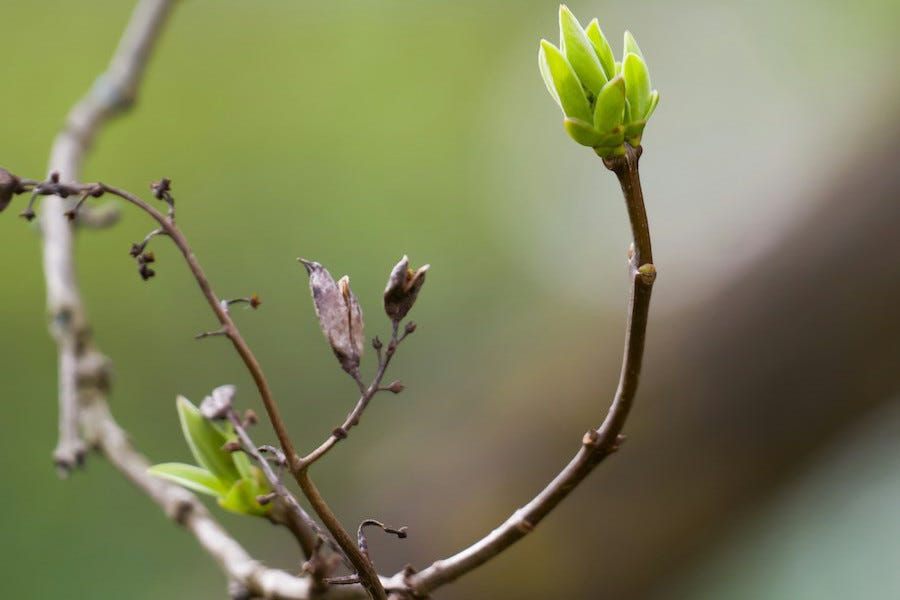
This is at the heart of the silent, unobtrusive schism in the church, and perhaps in all religions today. We have wrapped ourselves in the ancient mantle of superstition and therefore allowed the young, the educated, the thoughtful, the thinkers and philosophers of our time to reject it all as ancient ritual taken from an ignorant old world, filled with pious platitudes and earthbound explanations for the inexplicable, “pie-in-the-sky-when-you-die,” and therefore worthy of complete rejection. There is the schism in today’s world of religious belief and practice, and it too will eventually die, be relegated to another age, another time, another mark on the human march toward understanding and enlightenment. But until then we are at a crossroads of two different worlds, one that is dying and another that is only beginning to come to life and blossom. ♦
Gene Ciarlo is a priest no longer active in the ministry. Ordained from the American College, University of Louvain, Belgium, he spent most of his ministry in parish life. After receiving a master’s degree in liturgical studies from Notre Dame University he returned to his alma mater in Louvain as director of liturgy and homiletics. Gene lives in Vermont, where everything is gracefully green when it is not solemnly white.