


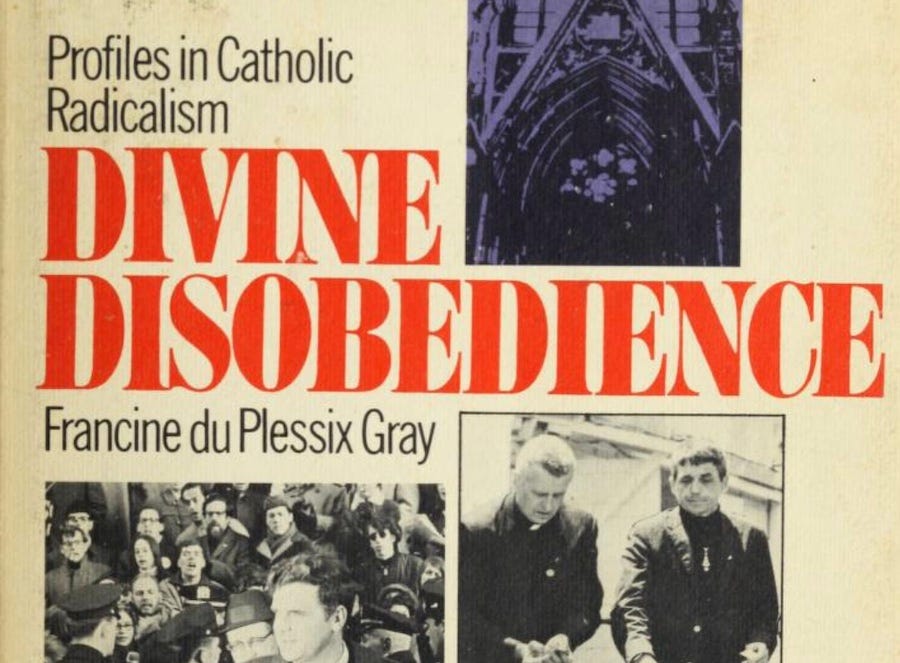
Earlier this week, in preparation for our podcast interview with lifelong peacemaker Fr. John Dear, I revisited what was, for me, a formative text in my return to the church: Francine du Plessix Gray’s Divine Disobedience, a journalistic account of the Catholic antiwar movement of the 1960s. Gray profiles the Berrigan brothers, Ivan Illich, and others who, she writes, “have remained deeply dedicated to their faith while rebelling against the Church’s traditional structure and who, in the course of their rebellion, have also become some of the most militant critics and reformers of secular society.” Her introduction offers an important caveat:
I wish to make it clear, however, that my understanding of radicalism, both in its semantic and historical senses, implies a return to roots. The non-violent revolutionaries such as the men I write about wish to return to ancient ideological principles—be they principles of the Gospel or of the Constitution—which they feel have been sullied by time and by the blind obedience of docile majorities. In this sense the rebel heroes of this book are deeply traditional, deeply conservative men.
One of the figures she interviews is Fr. Lyle Young—an Australian priest who, with Fr. David Kirk, founded the Emmaus House of hospitality in Harlem in 1966. I had the opportunity to meet Fr. Lyle a few years before his passing in 2013 at a dinner hosted by a mutual friend. Over drinks he shared stories of those pivotal early years, and one detail in particular has always stayed with me: Describing his work in prison ministry and the special vocation of Emmaus House to receive the formerly incarcerated, he said that these were among some of the best people he had ever met, and who had taught him the most. This strikes me now as a distillation of the pastor’s task: to enter into the contested space of a life seen as past salvation and, through simple presence and openness to mutual transformation, elicit the goodness there. It is what the poet, potter, and educator M. C. Richards calls in her prose-poem-as-pedagogical-guide Centering “a capacity for self-surrender to the reality of another person,” or what Fr. Lyle’s colleague Fr. Kirk expressed in Gospel terms: “To be a Christian is to place yourself at the place of suffering. Where there is suffering, there is God.”
I say “the pastor’s task,” but it is really the province of all Christians, all those called to healing and whole-making in the footsteps of the Master. In Divine Disobedience, Fr. Lyle gave a clue as to how he arrived to a similar conclusion as a director of mission work in Port Moresby, New Guinea. “Much of my faith, and much of my understanding of what religion is about, I received from the faith of the native people I worked with in New Guinea,” he told Gray. “It is from them that I understood that the Church is, first and above all, the community of mankind, and not the community of the baptized.” For those of us who have internalized the language of Lumen Gentium about the church as the “people of God” to the point where it almost becomes rote, such a claim can feel at once a challenge and a liberation. For me it is a reminder not to lose touch with that original expansive vision of the church I had before I even returned: an instrument of international and even cosmic unity, a way of sanctifying and regulating time like the scansion of a poem does to language. As John Dear wisely told us in our interview, referencing his mentor Daniel Berrigan’s recollection of a quote from Dr. Martin Luther King, “The church is the place you go from. It’s not the place you go to.”
Michael Centore
Editor, Tomorrow’s American Catholic
Growth and Transition
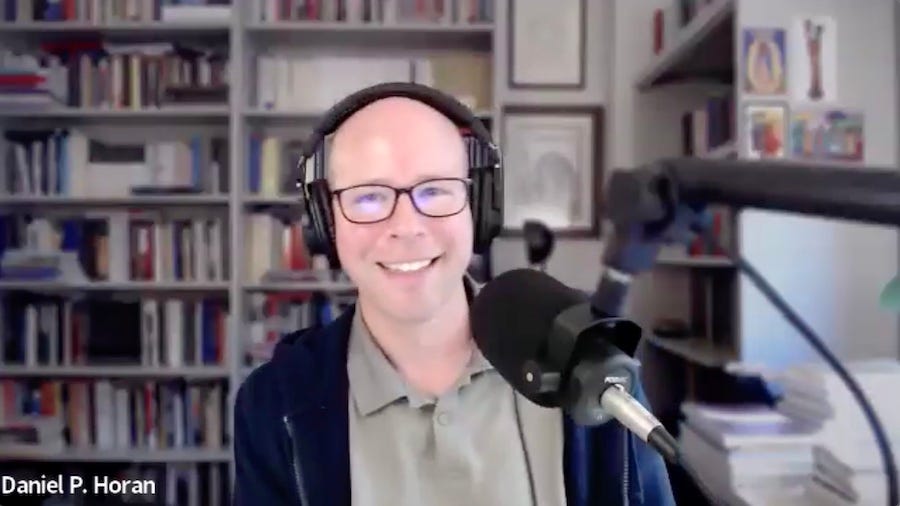
Daniel Horan is professor of philosophy, religious studies, and theology at Saint Mary’s College in Notre Dame, Indiana. A columnist for the National Catholic Reporter, he is the author or editor of sixteen books, including Catholicity and Emerging Personhood: A Contemporary Theological Anthropology, A White Catholic’s Guide to Racism and Privilege, and The Way of the Franciscans: A Prayer Journey Through Lent.
In this wide-ranging conversation, Dan walks us through his spiritual autobiography and shares why he sees his decision to move on from ordained ministry “not as an end and a beginning, but a transition.” We explore the practice of writing as an act of discernment, look at how the “geographic perspective” of Pope Francis and Leo XIV has changed the tenor of the church, and discuss why the core of the Franciscan charism—to “see each other as the siblings that we are in God, and to recognize that that sibling connection extends beyond the human family to the more-than-human world”—is so vital to us today.
Listen here »
Toward an Economy That Works for All
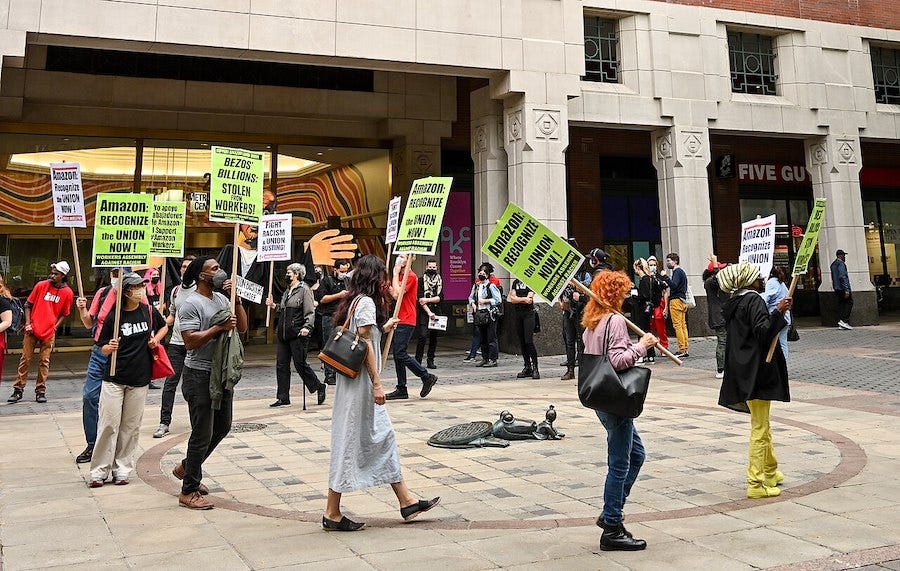
Charles R. Gibson on creating a more just economy in line with the tenets of Catholic social teaching: “A basic principle of social justice is that the economy exists for the benefit of the people, not for the benefit of the state (as in Marxism) or for the benefit of the corporations, which is the case of unrestrained (or barely restrained) capitalism, wherein employers can treat their employees in almost any way they want to. Although corporations can have broad freedom in which to operate, their behavior is subject to the requirement to operate consistently with the common good, that is, to the benefit of society.”
Read more »
The Lesson from Cesar Chavez
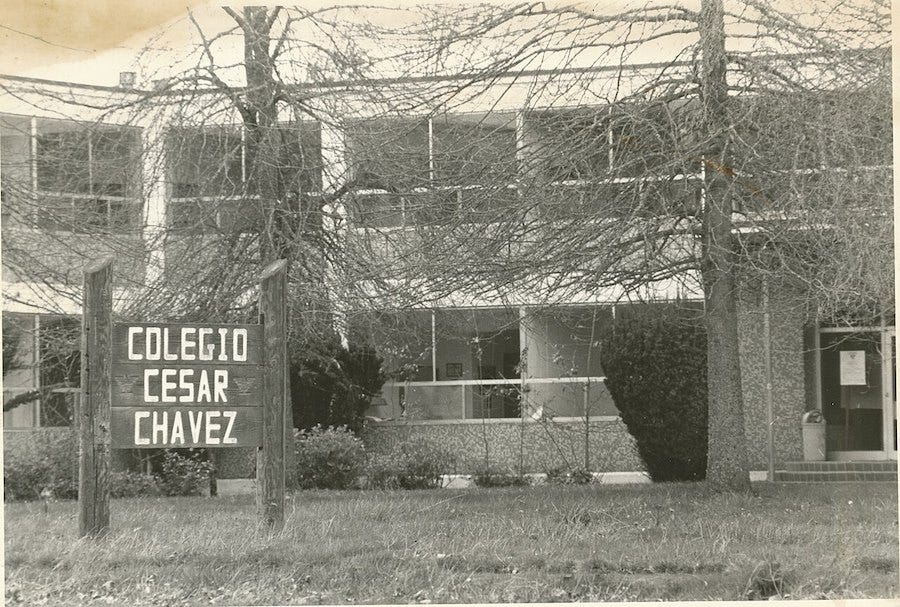
William Droel on the danger of revering organizational leaders: “When a pastor, community organizer, union official, or other group leader exhibits excessive fondness for attention, let it serve as a warning that the goal of social improvement is giving way to self-promotion. Social improvement needs those who project confident qualities that will attract and retain busy and creative followers. Yet the genuine change agent must stay out of the limelight and nurture the collective mission.”