


Scroll down for our latest offerings this week, including:
Our latest podcast with Sean Forrest, founder of the organization Haiti180
Fr. Joseph Victor Edwin, SJ, on pioneers of Christian-Muslim dialogue
Plus upcoming events of interest
I recently finished Robert E. Kennedy’s Zen Spirit, Christian Spirit: The Place of Zen in Christian Life. Kennedy is a Jesuit priest with an extensive background in Zen Buddhism, such that he was entrusted with the teaching of the White Plum Asanga lineage in 1991 and given the title roshi (“master”) by the Abbot of the Zen Center of New York, Bernard Tetsugen Glassman, in 1997.
Early in the book, Kennedy writes, “Interreligious dialogue with Buddhism means for me an opportunity to share in the Church’s ongoing reconstruction of itself as Catholic.” I paused over this notion of “reconstruction,” which, by definition, implies something lost that must be recovered. It is hard not to think of the restoration of Notre Dame in Paris that was completed last year (and is being historically contextualized in an exhibit of the work of French architect Eugène-Emmanuel Viollet-le-Duc, who oversaw a renovation of the cathedral in the mid-19th century, now on display the Bard Graduate Center in New York)—or the famous instruction to “rebuild my church” that Jesus gave to Saint Francis as he was praying before a crucifix in the chapel of San Damiano. What is this species of Catholicism—or, perhaps better yet, of catholicity—that Kennedy is alluding to as needing to be reconstructed? I found some stirrings of an answer later in the book: “For Christians,” Kennedy writes,
the world is not a panorama of objects. It is a network of relationships centered on the person who creates and is created by his world. Hence a person is not a passive subject imposed upon by moments, events, and encounters; he is instead a subject who either limits or transcends every moment, event, and encounter in the uniqueness of his own consciousness. To help someone grow in consciousness, therefore, appears to be a most appropriate Christian endeavor.
An emerging Catholic consciousness, then, is one where the egoic subject, the “I” that our culture has elevated above all else, realizes that it doesn’t just “create” the world through its techniques, its will, and its machines—Kennedy’s false “panorama of objects”—but is embedded in a network of relationships the subject receives and reflects. All subjects participate in this grand sharing, this process of collaboration and co-creation, and it is why something like the communion of saints can feel so real and present to us. I like, too, how Kennedy’s phrase “centered on the person” might be read in two ways: the person who is the active subject of faith, the individual consciousness that, like a sculptor of time, “limits or transcends every moment”; and the person of Christ himself who is the central node in the network of relationships, the person who models for us a prismatic consciousness that links the unity of light with the multiplicity of color in total transparency to the world.
“Christians are not urged to copy or repeat the words or gestures of Christ,” Kennedy counsels, “but to have his mind and to be one with his spirit.” Elsewhere, he draws on the thought of Thomas Merton to cast Christianity as “above all a deep personal experience which is at once unique, but is also shared by the whole Body of Christ.” I hear this in a more concrete key in a line from the poet Robert Francis: “Home is this little house in which I live, and much beyond it.” That movement beyond is a movement within, ultimately touching the fearless fellowship Kennedy and Merton find in the crucifixion: “to fully hear the word of the cross is more than a simple assent to the teaching that Christ died for our sins. It means to be nailed to the cross with Christ so that the ego-self is no longer the principle of our deepest actions which now proceed from Christ living in us.”
Michael Centore
Editor, Tomorrow’s American Catholic
Entering into the Suffering
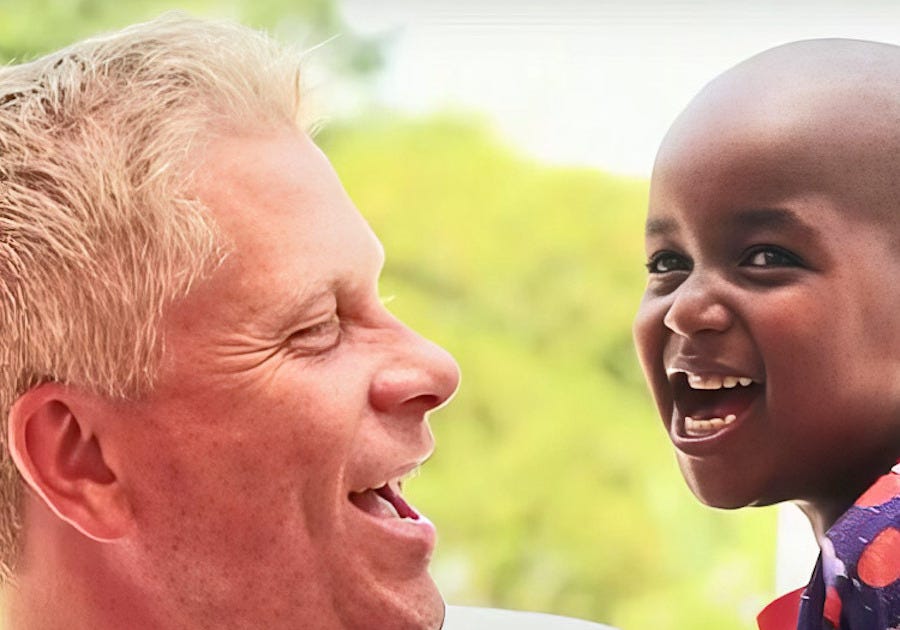
Sean Forrest is a musician, author, youth minister, and missionary who has used his gifts and talents to make an impact on many fronts. He is the co-founder of Haiti180, an organization that nurtures leaders of faith, provides love-filled childhoods, and extends God’s care through education, medical aid, and housing for Haiti’s poorest. In the latest episode of our podcast, we speak with Sean about his early religious upbringing and journey to the Catholic Church, his background as a musician and author and how these creative pursuits have shaped his faith and works of service, and the transformative experiences in Haiti that inspired him to start his organization.
Listen here »
Reimagining Our Sacred Stories
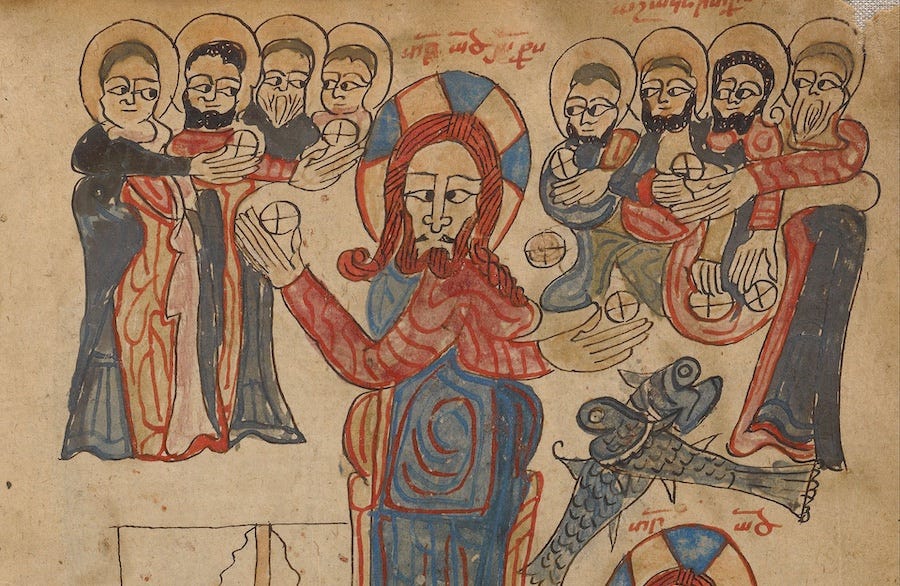
Patrick Carolan on rethinking how we tell our sacred stories: “To create a new Earth, we have to start with a story of oneness and interconnectedness, not separation. St. John of the Cross taught us that human desire is unlimited; the heart of all creation is not satisfied with less than the infinite. This infinite is clearly God. Our deepest desire is a desire of oneness with God. We turn away from God when we no longer consider God’s creation and all that it encompasses as sacred. We view evolution as a separate scientific theory rather than a spiritual movement, as St. John of the Cross describes, towards the infinite desire of oneness with God. Unless we accept the story of evolution as our sacred story we cannot go forward, as Thomas Berry challenged us, ‘as a single sacred community.’”
Read more »
Learning from the Pioneers
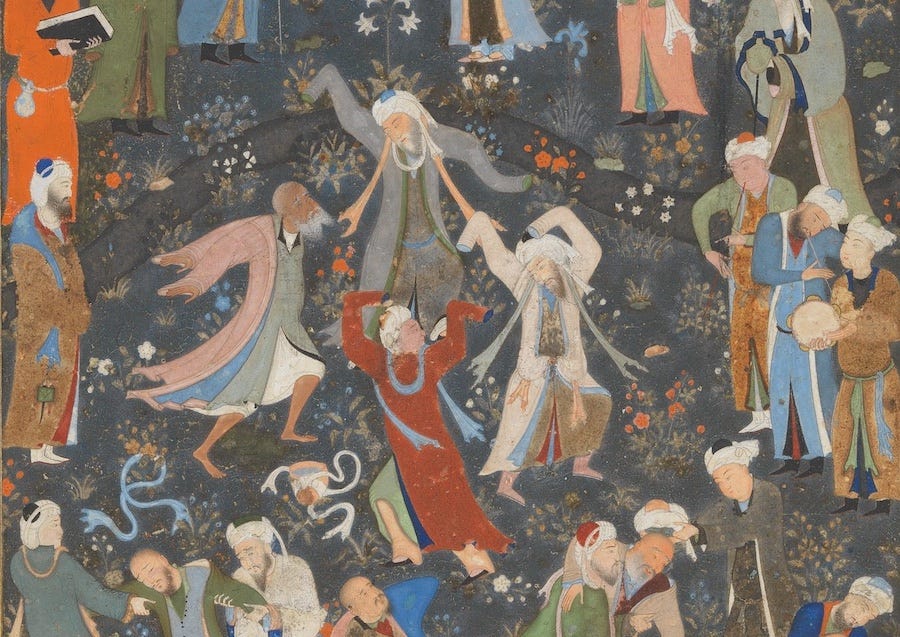
Fr. Joseph Victor Edwin, SJ, on the lessons of trailblazing teachers of Christian-Muslim dialogue: “Even before the publication of Nostra Aetate, Jesuit Father Victor Courtois called for a shift in perspective by seeing Muslims not as adversaries but as brothers and sisters. He emphasized the importance of focusing on shared values rather than engaging in divisive debates. Courtois suggested that studies on Islam should cultivate greater love and appreciation of Muslims. He insisted that we should focus on what unites Christians and Muslims rather than on what divides them. This would bring both communities closer to each other and to the heart of Christ.”
Read more »
Notes and Events
Our friends at Solidarity Hall have extended an invitation to read Dante’s Purgatorio in community later this spring. “Dante is never more self-consciously the poet and the artist, conversing and musing with his fellow artists, than in the second major section of his great poem, the Purgatorio,” they write. “It is also the part of the Comedy most concerned with the hope of earthly politics, as Dante encounters striking figures whose stories reveal qualities of both civic virtue and vice.” The group will meet via Zoom on Tuesdays from 2:00 to 3:30 p.m. ET, starting May 5, and will take up three cantos per session. A full itinerary for the 10 sessions as well as registration information can be found here.
This coming Monday, April 13, Georgetown’s Initiative on Catholic Social Thought and Public Life will host a live-streamed dialogue on “Iran and Catholic Teachings on a Moral Foreign Policy” from 12:30 to 1:30 p.m. ET. Information and registration are available here.
Faith in Action is hosting their monthly call for solidarity and prayer on Tuesday, April 14, at 8:00 p.m. ET. “During our call, we will take time to lament, pray for lives lost and offer glimpses of light in the midst of suffering,” they write. Registration is available here.
On Thursday, April 16, from 1:00 to 2:00 p.m. ET, join Sister Maria Marta Zielińska, CSSF, postulator for the canonization cause of Blessed Mary Angela Truszkowska, for a special presentation on the process of canonization in the Catholic Church and the current status of Mother Angela’s journey toward sainthood. Information is available here.
Join the Association of US Catholic Priests (AUSCP) Women in the Church Working Group on Wednesday, April 22 at 1:00 p.m. ET for a 90-minute online gathering of women and priests. The program will include brief testimonies, a guided Lectio Divina, Conversations in the Spirit, and a Q&A. Grounded in the Synod’s call for “full implementation of opportunities” and AUSCP’s mission of compassionate, collegial accompaniment, this event creates a respectful space for listening, shared witness, and pastoral imagination about women’s leadership in parish life.
The Guild for Spiritual Guidance is hosting a two-day program, “The Collective and Personal Shadow—Jungian Strand,” on May 8 and 9. “Considering the world we live in, this program aims to bring awareness to our collective and personal shadow. Using Carl G. Jung’s understanding of shadow will help to shine a light in places we haven’t explored before,” they write. Information and registration is available here.
Reconstruction. I like that!