


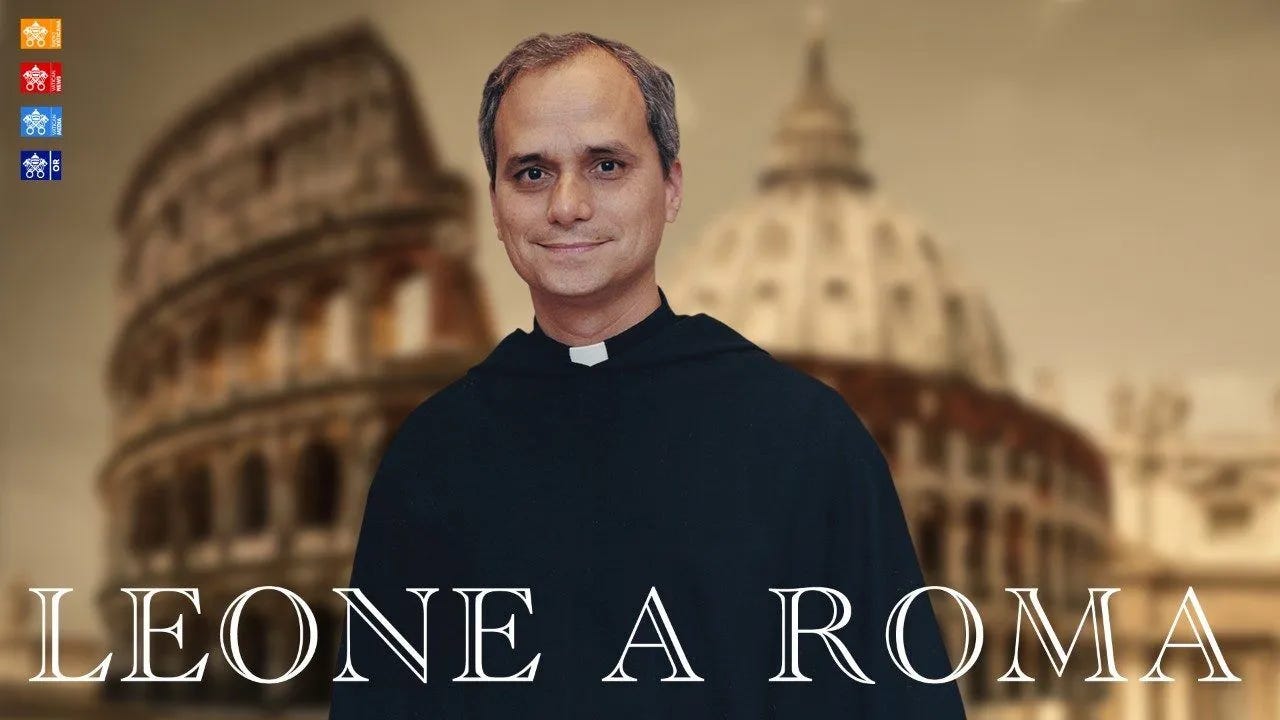
Last night I watched the film Leo in Rome (Leone a Roma), a short documentary produced by the Vatican’s Dicastery for Communication that assembles archival images, interviews, and contemporary footage to tell the story of Robert Francis Prevost’s time in Rome prior to his becoming Pope Leo XIV. We hear from his classmates at the Angelicum, his alma mater, as well as former parishioners and members of the Augustinian Order of which he served as Prior General from 2001 to 2013. Interspersed with these recollections are photos of the young Prevost growing into his vocation—presiding over Mass in one, participating in a protest against nuclear weapons in another. The sum total is a portrait of a man who seems to have arrived to his place in history naturally, without any of the convoluted maneuverings we associate, rightly or wrongly, with the Roman Curia.

“Natural,” in fact, is a word that comes up quite frequently in the documentary, along with its sister virtues of openness, simplicity, peacefulness, and prudence. “He does not give space to impulsiveness,” says one interviewee; another speaks of how he “gathers all his potential” into prayer. Several describe the pope as “normal,” which in another age might sound underwhelming, even something of a slight, but that here rings as a valediction when we consider the abnormality of our times. In a world hollowed out by greed and the fevered musings of techno-feudalists, where we can mint a trillionaire based on false promises and the financialization of an economy divorced from the physical world, the “normalness” of Leo—I think of the Buddhist concept of “ordinary mind”—holds as a still center amidst the chaos. It’s that measured, deliberate spirit that animates Magnifica Humanitas, his inaugural encyclical, and its call for us to question the “paradox of material progress and anthropological regression that undermines the foundations of a just and stable social peace” (154).
Leo in Rome makes clear that this “normalness,” this depth-in-simplicity and simplicity-in-depth, derives from a life of prayer and devotion. Time and again we hear how then Prior Prevost’s singular aim with the Augustinians was to create an atmosphere of fraternity, community, love, and peace. “Unity” might well be the watchword for his papacy, and it has its roots in this conciliar leadership style—listening to everyone, not so much admonishing as gently instructing or indicating paths forward. It is a hallmark of one who has spent so many years in service of the hidden Christ, the Christ who doesn’t insert himself into the center of things but stands off to the side, condemning by his very presence the empty show and “pretentious life” (1 John 2:16) of those who would dominate the world.
It is also a sign of Leo’s fidelity to Our Lady, especially considering his long association with the Augustinian Province of Our Mother of Good Counsel in the midwestern US; the documentary features scenes of him praying at the Sanctuary of Our Lady of Good Counsel, the shrine southeast of Rome under the guardianship of the Augustinians that houses a treasured Marian fresco. “Counsel” is an apt title to conceptualize this pontificate, as it implies a spiritual work of mercy that guides, gathers, and inspires, and that depends not on force but on a listener’s receptivity. The image of Leo attuning himself to the counsel of Our Lady is reflected in the way the church heeds Leo’s counsel to unity. As Dominican priest and Angelicum graduate Fr. Joseph Fox says toward the end of the documentary, “The words he uses are not so important, but rather that we can breathe with him, we can pray with him, and we can live with him.”
Michael Centore
Editor, Tomorrow’s American Catholic
Ministering in Images
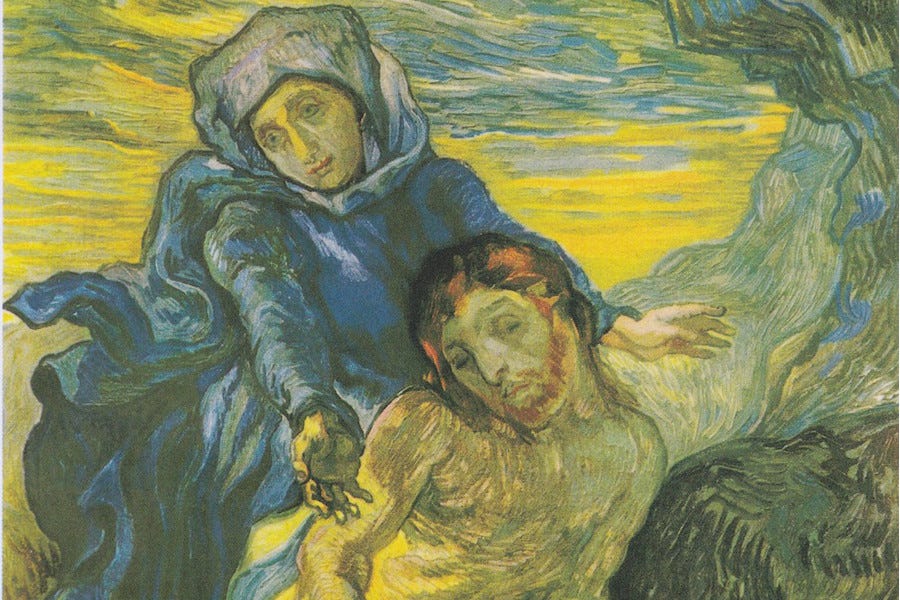
Thomas Masaryk is an artist, deacon, and hospital chaplain. His work has been featured in individual and group exhibitions, as well as numerous publications in the United States and overseas. Throughout his career he has given professional seminars and demonstrations in the Connecticut, New York, Boston, and Philadelphia areas.
In the latest episode of our podcast, Deacon Tom takes us through the varied stages of his vocations as an artist and ordained minister. We look at the relationship between creative and spiritual practices, the need to find new sacred stories through visual language, and how Deacon Tom uses guided retreats to “help others find the sacredness of what they do.”
Listen here »
An Experiment in Communion
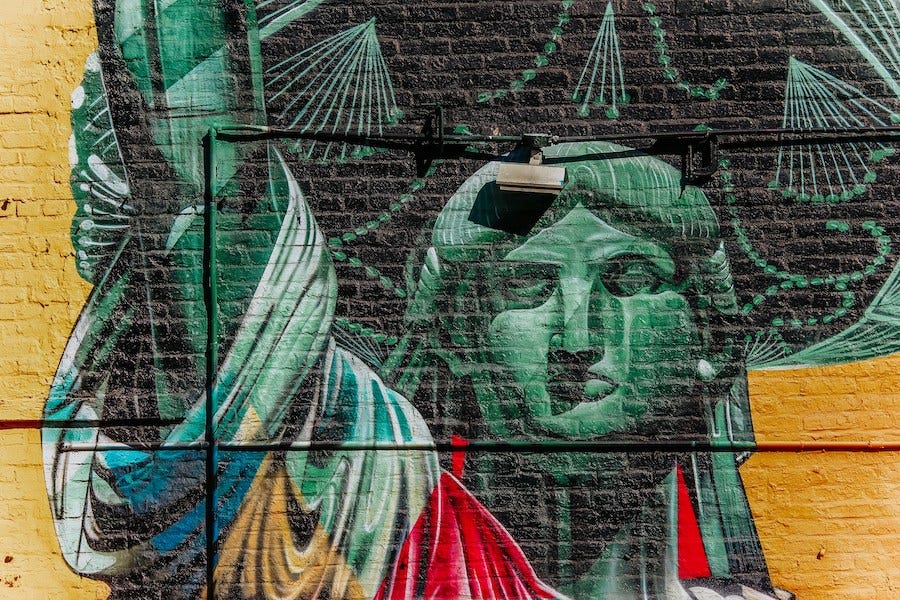
Rev. Cornelius Uche Okeke reflects on the Fourth of July through a theological lens: “Genuine communion presupposes and values distinct identities. Unity is most meaningful when it emerges from the free and respectful interaction of individuals and communities that maintain their unique histories, cultures, and traditions. Both persons and nations achieve greater maturity when they confront their fears, acknowledge their limitations, and learn to encounter others with openness rather than suspicion.”
* See also Deacon Art Miller’s reflection for the Fourth, “Not Just a Celebration, a Summons”—and this just-released episode from the always stimulating Lost Prophets podcast looks excellent, too!
Read more »
News, Notes, and Invitations
Pope Leo XIV will convene a worldwide meeting of Episcopal Conference Presidents at the Vatican from October 7–14, 2026, focusing on the 2016 apostolic exhortation on the pastoral care of families, Amoris Laetitia (The Joy of Love). To support this synodal discernment, Catholic Church Reform International (CCRI)—at the suggestion of the Association of U.S. Catholic Priests (AUSCP) and in collaboration with Ignatian Encounter Ministry (IEM)—is launching a global initiative to share the lived experiences of diverse families directly with the Synod Office.
The organizers write: “We are inviting families from all around the world to host small, informal listening sessions using the Conversations in the Spirit format to share your joys, struggles, and pastoral needs. Though ambitious, we believe these authentic voices will provide vitally important information to church leaders reflection on modern family life.”
How It Works
1. Gather: Families or small groups meet to reflect prayerfully on their experiences as a family, giving each member equal time to speak. (A tutorial of how to hold a Conversation in the Spirit is available through IEM’s website here.)
2. Submit: Members of the family use this form to capture the themes that emerge: convergences (issues on which everyone agrees), divergences (issues left unresolved), and suggestions of how the church could better guide and support them through their struggles.
3. Deliver: CCRI and IEM will synthesize these global insights and deliver them to Pope Leo and the Synod Office by mid-September.
Organizers invite others to publicize this initiative through parishes and other networks, and to encourage families, clergy, and pastoral ministers to host a conversation and submit feedback.
As their Season of Faithful Witness initiative comes to a close, Catholics in Communion has released a short recap video celebrating the leadership, prayer, and public witness that unfolded across the country over the past several months. Catholic communities responded to the signs of the times through accompaniment, public action, and prayer, offering witness to the dignity of every person, care for our common home, and the common good. Watch the season recap here, and find Tomorrow’s American Catholic’s conversation with Sergio Lopez of Catholics in Communion here.
On Tuesday, July 21, Catholics from across the country will gather to discern how this movement continues beyond the Season of Faithful Witness. The July All Call will introduce three areas of ongoing work: parish- and organization-based formation, faithful citizenship and election safety, and detention center witness support. Participants are encouraged to bring their local teams as Catholics in Communion begins discerning the next phase of faithful public witness. Register here to join for the July All Call.