



A cluster of ecologically themed stories came out this week, propelled in part by the COP31 United Nations Climate Summit held from November 9 through 20 in Antalya, Turkey. First, on November 17, Cardinal Pietro Parolin addressed the summit and stated that “the climate crisis is being overshadowed by geopolitical tensions driven by narrow self-interest and shortsightedness, which foster conflict and fragmentation.” He lamented that climate disruption “disproportionately affects the poorest and future generations, who are least responsible for causing it” and urged nations around the world to “collaborate on shared priorities through a cohesive and forward-looking multilateralism.”
Also on November 17, as reported by Brian Roewe of the National Catholic Reporter, 31 Catholic organizations pledged to disinvest from fossil fuels including coal, oil, and natural gas. Roewe notes that more than 700 faith-based organizations have committed to fossil fuel divestment, including over 400 Catholic institutions. He also references campaigns from the Laudato Si’ Movement as well as Vatican-sponsored initiatives and recommendations for divestment.
Then, on November 18, the US Conference of Catholic Bishops voted to adopt their updated set of Socially Responsible Investment Guidelines at their fall plenary assembly in Baltimore. With characteristic caution, the bishops regrettably did not endorse full divestment from fossil fuels, though they vowed to keep the appeal of the church of the Global South to see clean energy as “a moral and political imperative” in mind as they make decisions.
Such half measures fall short of the scale of the crisis facing the planet, as humanity exceeds the 1.5-degree Celsius “safe temperature threshold” and endures increasing warming, sea-level rise, desertification, and other disasters compounded by an ecosystem out of balance. Even fiddling with the language of “investment” in a church that is called to be a “field hospital”—a prophetic sign and sacrament of a less mercenary reality, known by its spontaneous acts of charity and love—feels like a symptom of this very imbalance, a world blown out of proportion by the dominance of finance.
These stories were preceded by Pope Leo’s speaking forcefully and prophetically in Pucallpa, Peru, at the end of his South American journey on November 15. Pucallpa is the second-largest city in the Peruvian Amazon, where 37 Indigenous leaders have been murdered since 2013 in retaliation for defending their land against illegal logging and mining. The pope said that their sacrifice “cries out to God and demands justice”; drawing on the language of his predecessor Francis, he humanized his ecological message: “The cry of the earth and the cry of the poor are inseparable, exposing patterns of exploitation and economic activity that threaten the balance of creation. Protecting the Amazon rainforest cannot be separated from concern for the people who live there: indeed, integral ecology, social justice and the spiritual life go hand in hand.”
Once again the pope has shown his gift for awakening consciences by simply pointing to the Gospel—in this case, the linking of ecology, justice, and spirituality such that each one conditions and enlivens the next. The memory of the integrated earth, of a biosphere where “everything below hangs together from on high” (Maurice Blondel), moves us to spiritual praise, which compels us to witness to the well-being of our neighbor. In a passage from his Letters from a Traveller, Teilhard de Chardin caught something of this cyclical eucharistic movement that redeems even our errors and lapses: “It seems to me that in a sense the true substance to be consecrated each day is the world’s development during that day—the bread symbolizing appropriately what creation succeeds in producing, the wine (blood) what creation causes to be lost in exhaustion and suffering in the course of the effort.”
Michael Centore
Editor, Tomorrow’s American Catholic
Global Formation Project’s African research team shares work on spiritual maturity
The Global Formation Project is a large-scale Christian research and resource initiative focused on understanding how people develop spiritual maturity, character, virtue, and Christlikeness across different Christian traditions, cultures, and contexts. Last month, Tomorrow’s American Catholic had a chance to speak with members of the project’s African research team, which is examining three interconnected areas: formation documents and policies; how Christian formation and spiritual maturity are embodied in practice; and maturity in pastoral care.
“The project examines not only what happens inside seminaries and formation houses, but most importantly what happens when those who have been formed begin serving God’s people. We are asking whether the formation we provide actually produces spiritually mature Christian leaders—and whether that maturity becomes visible in the way they live, lead, serve, and help God’s people grow closer to God,” said research team leader Sr. Leonida Katunge.
Read more »
Speech Acts
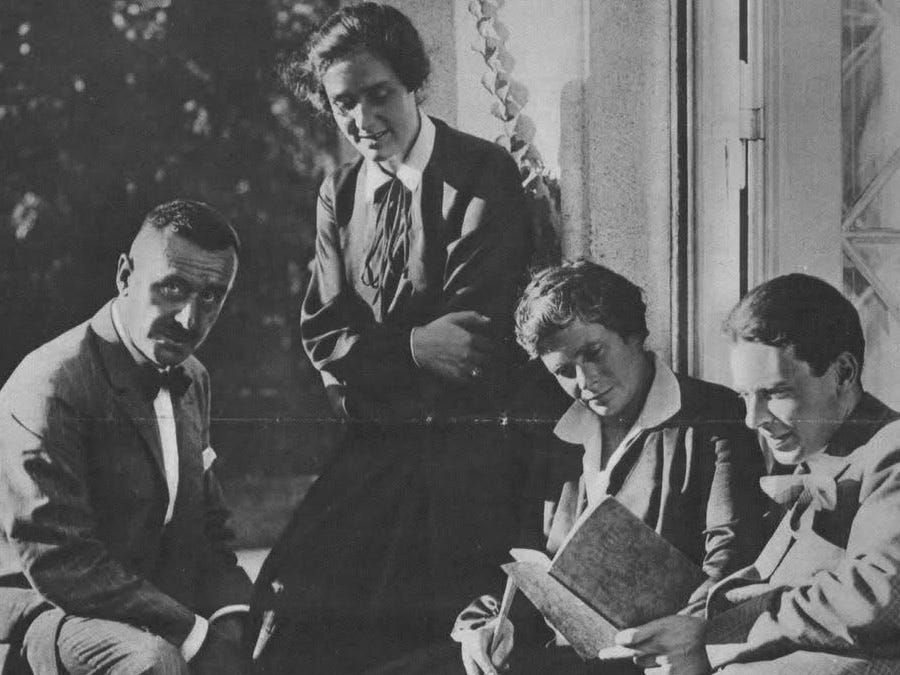
Jeromiah Taylor on Pawel Pawlikowski’s latest film, Fatherland: “Despite its cleverly multivalent title, the film is not about paternity or patriotism, but rather about art and life. The film’s juxtaposition between silence and formal speech—criticized by at least one thoughtful critic—reveals the futility of even the most beautiful language when addressed to the morally dull. Mann’s audiences want themselves and their enterprises to be christened; they could not be less interested in being converted. Although the historical Mann was arguably more aware of the trip’s dynamics, Pawlikowski’s dramatized Mann is incapable of accepting them—of accepting the inability of his language to move worlds.”
Read more »
The Value of Life and the Christian Response
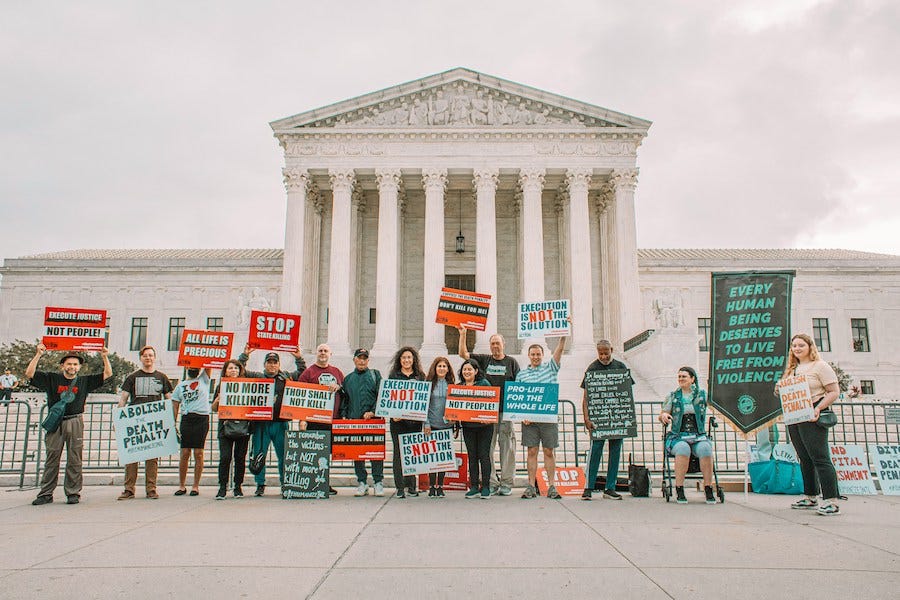
Sr. Mary Ann Flannery reflects on the abolition of the death penalty: “Sociologists and psychologists have done much research showing that the families of victims do not experience peace following the execution of someone who took the life of their loved one. For a short while there might be a sense of retribution, of ‘getting even,’ so to speak. But often there is the detritus of ongoing investigations, the haze of memory and occasional publicity, the unrequited anger. In a sense, murder has no end, not even with the death of the murderer.”