


James Butler’s review of J. D. Vance’s memoir of his conversion to Catholicism, Communion, in the August 13 issue of the London Review of Books gets at something inherent to Catholic integralism and Christian nationalism more broadly: the subservience of the faith to the needs of the state, a twisting of the mystery and demands of the gospel in order to produce a desired social outcome centered on worldly power. Butler writes:
Instrumentalism is a very common modern approach to religion: it matters as far as it makes me a better citizen, partner, member of society, or brings me pleasure or comfort. Some right-wing thinkers have revived the defence of faith as a ‘noble lie’. Is Christianity good because it is useful or because it is true?
Reading this passage brought to mind the well-known line from Dostoevsky’s letter to Natalia Fonvizina in 1854: “If someone proved to me that Christ is outside the truth and that in reality the truth were outside of Christ, then I should prefer to remain with Christ rather than with the truth.” How many of us might be prepared to make such a claim? For an opportunist like Vance, whose hopscotching from one ideological camp to the next depending on the appetites of his ambition is legendary, the Way of Christ can be subsumed into what Butler names “the social utility of faith as an institution.” This is Christianity reduced to a system, stripped of the paradoxes of the Beatitudes and the folly of the cross; it is like an exoskeleton over the body of Christ, or, to tweak the metaphor, a lattice of scaffolding covering the building of which he is the cornerstone.
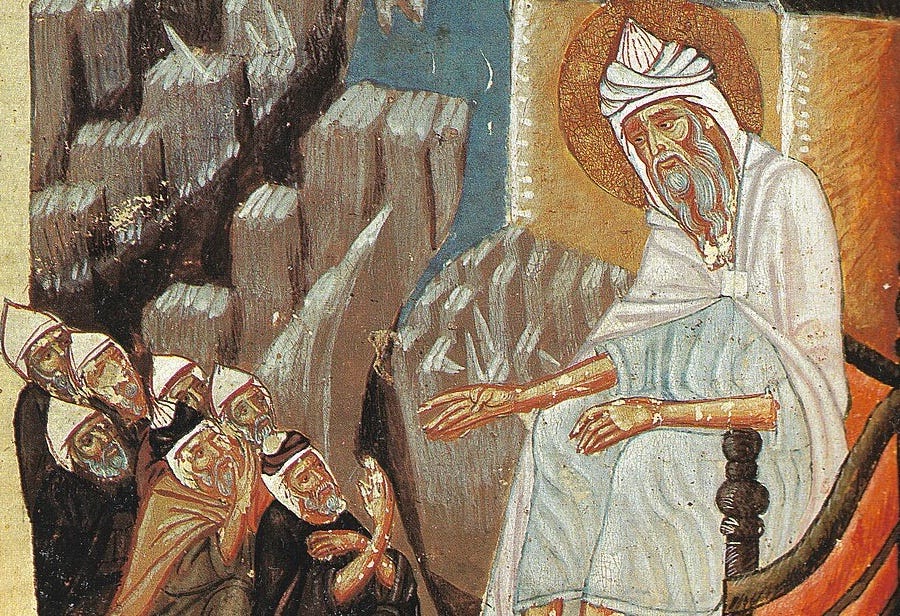
Comparisons to ancient Rome abound these days, and it might be instructive to consider another reaction to the coupling of religion and state power in the early era of imperial Christianity: the flight of the monks and nuns to the Egyptian desert in the third and fourth centuries, resulting in the formation of ad hoc communities—we might think of them as “monastic republics”—whose membership was based on voluntary accession to the virtues “through which we give the kingdom of our heart […] to Christ,” in Saint John Cassian’s edifying phrase. There was nothing compulsory about the way of the desert, just a desire to grow nearer to God through the practice of charity, to reduce oneself and overcome the “lust for power and idle talk” that keep us in thrall to our own self-image.
Faith in such a space could not be instrumentalized; it was its own end, as virtue is its own reward. Whereas imperial religion coerces, puffs up, distorts, and controls, the praxis of the desert dwellers shows us a faith that liberates through prayer, repentance, simplicity of service, and attentiveness. In this it gradually unmasks the false self and all of its deceptions. We are left with the bare rudiment of Christianity as an encounter with a Person, not a system, retaining all the openness and flexibility such a living relationship requires—M.C.
Vigilance and Public Witness
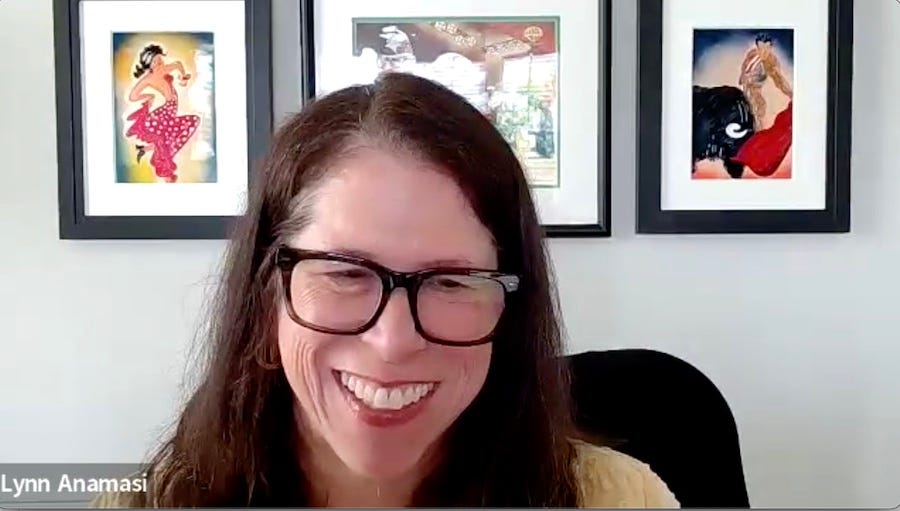
Lynn Anamasi is a faith‑led advocate and community builder whose work bridges spirituality, justice, and service. She is a board member and the Charlotte chapter president of the SOAP Project, a national anti‑trafficking organization that equips volunteers and hotel staff to recognize the signs of human trafficking and identify missing children through labeled bars of soap and targeted outreach.
In this week’s episode of our podcast, Lynn shares with us her spiritual background, with a special focus on the impact of the Cursillo movement on the development of her faith. She discusses how she became involved with the SOAP Project along with the origins, mission, and outreach efforts of the organization. We look at why it is so important to raise awareness and correct misconceptions around the issue of human trafficking, and Lynn offers real-life examples to show how SOAP is educating the public and helping survivors to heal.
Listen here »
Guidance from Unlikely Sources

Mark Piper on how two “anti-saints” provide guidance for a new stage of life: “Taken together, Lot’s Wife and Simon are buffers, keeping me out of the ditch as I follow the path of life. They remind me that even though the days are long, looking back ossifies my presence, and finding shortcuts wastes time; both inhibit human and spiritual growth. As the cliche goes, getting there isn’t half the fun, it’s all the fun. And so, in spite of the exhaustion, frustration, and chaos in this season of life, I will attempt to heed the directive that St. Paul gave to the Romans: rejoice in hope, endure in affliction, and persevere in prayer.”
Read more »
Cinema Divina
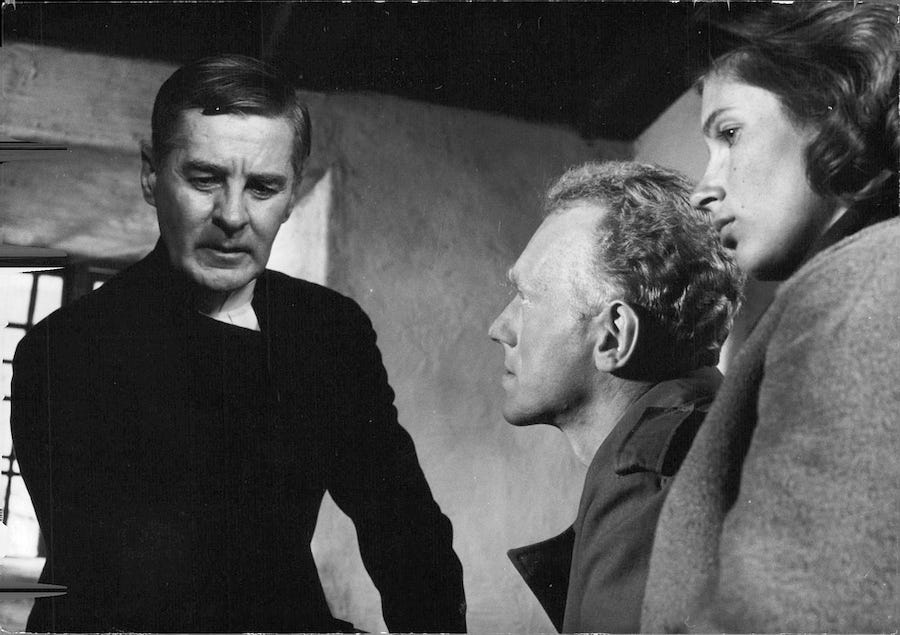
Sr. Lou Ella Hickman on praying with film: “Even when they are no longer shiny and new, films, like other forms of literature, can age well in terms of appreciation. Time creates a kind of distance, a reframing of the film’s storyline due to changes in cultural perspectives. As such, movie night can become a source of spiritual growth and nourishment both for an individual well as a family. Watching an older film can be especially impactful when it coincides with a liturgical season.”