


In preparation for our coverage of the World Institute for Science, Religion and Culture conference next week, I have been reading Teilhard de Chardin, with a special focus on his Writings in a Time of War and The Phenomenon of Man. Teilhard is a highly visual writer, and in sentences such as “It will not be long now before the noosphere finds its eyes” or a description of “a multitude of the independent and spontaneous—atoms, molecules, cells—in turmoil beneath the unity of my own organic structure,” one has the sense of a scientific mind groping to find physical images to match its intuitions. The author himself hints at this poetic strain of thought—itself an example of the synthesis of reason and mysticism that he predicted would be one of humanity’s main lines of advance in the age to come—when he acknowledges at the end of Phenomenon that some readers may wonder whether he has been leading them “through facts, through metaphysics or through dreams.”
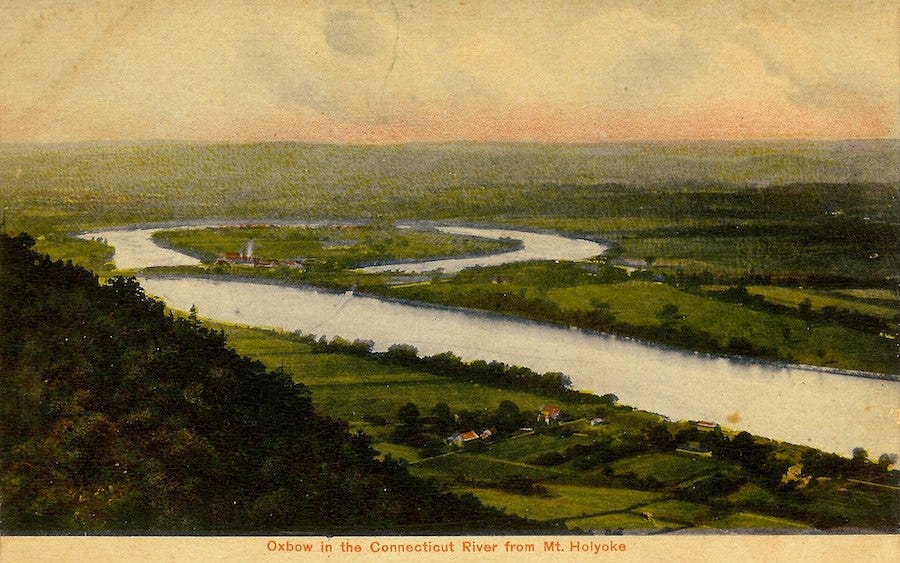
Alongside Teilhard, I have been savoring the new collection from Connecticut River Valley poet Richard Shaw, Leap into the Waterfall. I return to Shaw’s verse time and again to calm, still, and center me; it’s a calmness that clears the foreground chatter of the mind to better attend to the color, tone, light, and texture of the world. Some lines from his poem “Swirling” brought me immediately into Teilhard’s “‘cosmic composition’ of created being”:
. . . unhurried
we might feel
in the curves of our arms
how we formed as an embryo
out of spiraled watersame clockwise whorl
as the uncoiling of ferns
or gyrating star-river
of the Milky Way
Read this against Teilhard, in Phenomenon, on the limitations of using our origins to predict our ends:
If in its structure the embryo of each thing is fragile, fleeting and hence, in the past, practically ungraspable, how much more is it ambiguous and undecipherable in its lineaments? It is not in their germinal state that beings manifest themselves but in their florescence. Taken at the source, the greatest rivers are no more than narrow streams.
The shared vocabulary of embryos and (star-)rivers, the way Shaw’s uncoiling ferns map onto Teilhard’s florescence, put me in mind of an observation from “The Universal Element”: “The unity or measure of the world, is the world itself.” Twenty years after that essay was published, in the midst of another world war, Karol Wojtyła would come to a similar conclusion while toiling in Poland’s Solvay chemical plant. “[I]f one probed questions deeply enough,” the biographer of the future Pope John Paul II reports him as realizing, “the unity of things-as-they-are, from the lime buckets he carried to the God he worshipped, would reveal itself in due course. Reality itself was the true measure of thought.” It’s a conclusion that Teilhard illumines for us time and time again, in one instance using a term that would have been dear to John Paul’s heart: “Though the proliferations of living matter are vast and manifold, they never lose their solidarity.” The italics are in the original.
Michael Centore
Editor, Tomorrow’s American Catholic
Biblical Justice
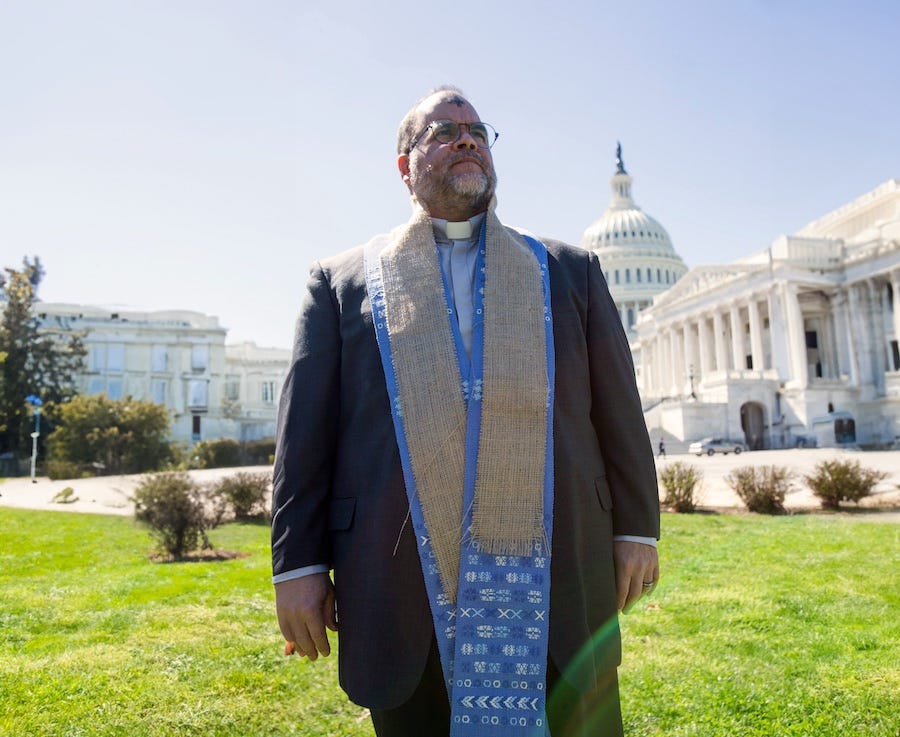
The Rev. Carlos L. Malave is the president of the Latino Christian National Network (LCNN). LCNN is a broad Christian Latino network that includes Pentecostal, Evangelical, and Mainline leaders. The work of groups like LCNN is a major reason why we saw the repudiation of authoritarianism and anti-immigrant sentiment in the elections earlier this week.
In this conversation, Rev. Malave shares insights into his vocation as a pastor, bridge-builder, advocate, and organizer. He explains how his ecumenical work has evolved over time from a focus on doctrinal issues to the “existential challenges that we have in our lives,” speaks of finding “points of commonality” between the churches, and explores how the concept of “biblical justice” binds our various denominations together. Describing himself as “a Catholic from afar,” he expresses his admiration of Popes Francis and Leo XIV for “shaking the conscience of the world with the principles of the Gospel” and recounts fruitful collaborations with Catholic clergy and laypeople in “the work for the transformation of the kingdom.”
Listen here »
Grace, Service, and Gratitude
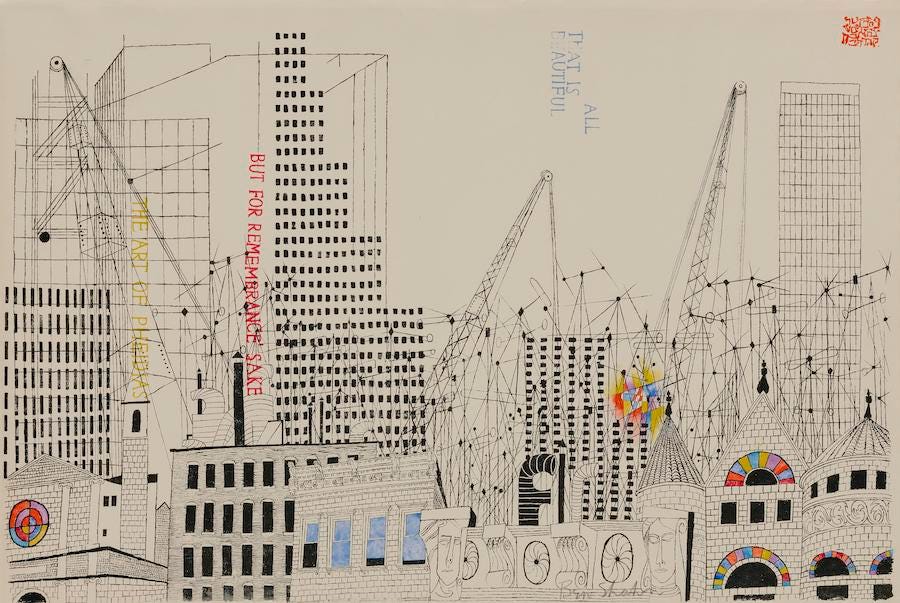
O’Neill D’Cruz has graced us with several “retreats in writing” and participatory reflections—like this one on praying the rosary as an anti-racist practice, or this reading of the Last Supper “as a parable for all places, people, and periods.” This week, he invites us to “make America grateful always” through a guided meditation on grace, service, and Catholic Social Teaching. Unlike previous reflections, this one is focused more on “seeds” of contemplative action rather than specific directives—it is our hope that reader-participants sow them in “good soil, accept it and bear fruit” (Mark 4:20).
Read more »
Catholic Women Preach celebrates 10-year anniversary
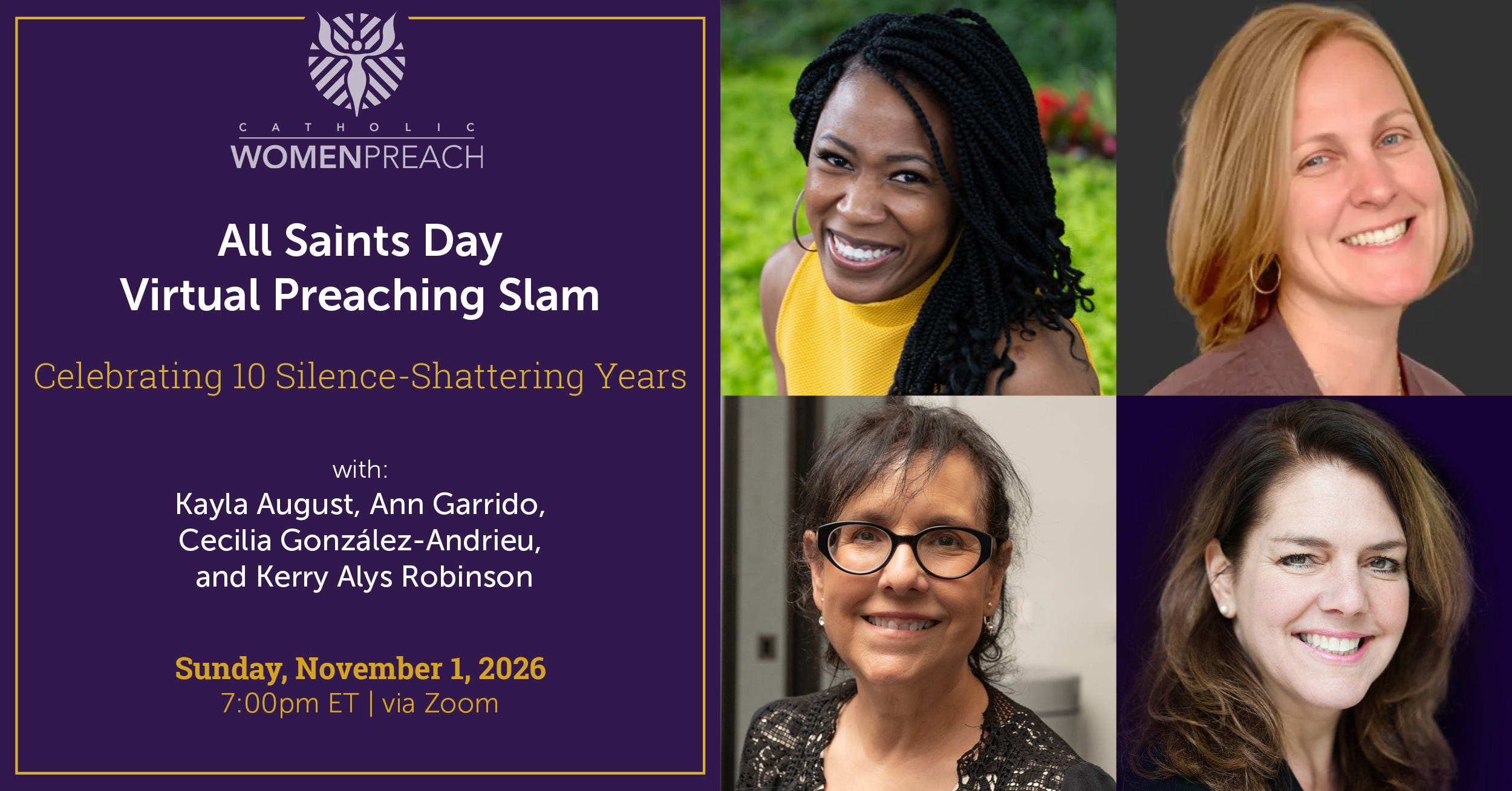
Since launching on All Saints Day in 2016, the Catholic Women Preach (CWP) project has provided a space for 483 women to offer 620 lectionary-based reflections. On November 1, the advocacy organization and CWP project sponsor FutureChurch hosted a “virtual preaching slam” to celebrate what they described as “ten years of preaching that widens the table.” Over 200 participants joined the Zoom-based event, which featured a full Liturgy of the Word with music, prayer, and readings for the day, as well as four individual preachers who previously contributed to CWP.