



Last week we looked at Leo in Rome (Leone a Roma), a short documentary produced by the Vatican’s Dicastery for Communication that tells the story of Robert Francis Prevost’s time in Rome prior to his becoming Pope Leo XIV. It feels appropriate to follow up this week with some thoughts on Leo from Chicago, a companion documentary also produced by Vatican media that profiles the early life of this son of the Second City.
Young Prevost seems to have had an almost preternatural kindness about him. His elder brother recounts a story of the two of them coming across a gang of neighborhood toughs while riding their bikes one afternoon. When they threaten the brothers, Robert is able to talk them down, and they suddenly turn friendly. It’s an early example of the thoughtfulness and tact—and willingness to move through fear to encounter—that will characterize his pastoral, episcopal, and now pontifical leadership style.
Time and again Prevost’s associates describe him as kind, gentle, one who listens before he speaks. It doesn’t matter from which chapter of his life they are drawn: friends from Villanova University and professors from the Catholic Theological Union, brothers from the Augustinian Order, parishioners from St. Jude in New Lenox, Illinois—they all point to his ability to generate a feeling of warmth and inclusion and his particular gift for friendship. One gets the sense that he wears his office lightly, that he has not accrued power so much as influence has followed him by virtue of his goodness. “It is good to have this man in our house,” says one friend, a Lutheran pastor, describing his family’s reaction to a visit from Prevost years ago; something about the tone of the reminiscence, the simplicity of the recognition, put me in mind of the disciples of Emmaus whose eyes were opened at table with Christ.
The word that comes up repeatedly throughout the documentary is calm. Prevost is noted for his “calmness,” for being “calm under pressure” and “calm and very present.” Nothing seems to faze him—he has that hidden wellspring of confidence in God that his predecessor Pope John Paul II had, though in a less self-consciously theatrical key. It’s a quiet confidence, measured and considered, and that has as its telltale sign something also noted by several of the interviewees: a deep and abiding joy.
Hearing these multiple accounts of calmness and groundedness, I thought of the monastic ideal of apatheia or dispassion, a mastery of the passions that is linked to love and purity of heart. “Apatheia has a child called agape who keeps the door to deep knowledge of the created universe,” writes Evagrius; in other monastic sources, the Greek term ataraxia, or “calmness,” is used as a synonym for apatheia and denotes the same quality of spiritual freedom.
It is easy to remember that the pope orients the church through public pronouncements and documents; less evident is the way he creates a program, a direction, through his presence, the special gifts and virtues he has cultivated and that he places in the service of the church. Providence has ordained this moment for Leo, and one subtext of the documentary is that the world needs his calm—and that those of us who follow in communion with him might do well to emulate it as we show one face of the Body of Christ. In the words of the Letter of James, “But the wisdom from above is first of all pure, then peaceable, gentle, compliant, full of mercy and good fruits, without inconstancy or insincerity” (3:17).
Michael Centore
Editor, Tomorrow’s American Catholic
Relational Activism
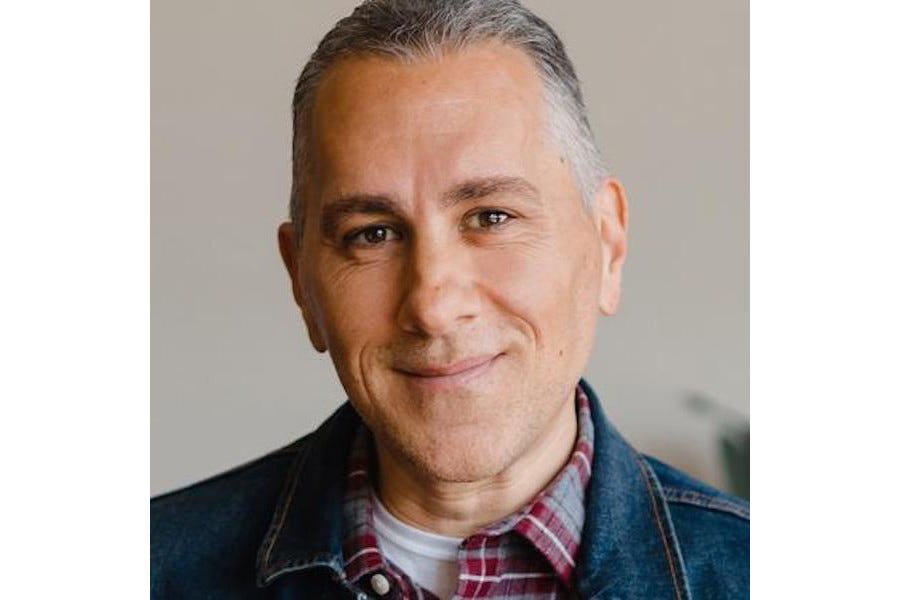
John Pavlovitz is a writer, pastor, activist, and storyteller from Raleigh, North Carolina. A veteran of local church ministry, he is committed to equality, diversity, and justice, both inside and outside faith communities. His many books include A Bigger Table: Building Messy, Authentic, and Hopeful Spiritual Community; Worth Fighting For: Finding Courage and Compassion When Cruelty Is Trending; and devotionals for the seasons of Advent and Lent.
In the latest episode of our podcast, John shares with us his formative faith experiences in both the Catholic and Methodist Churches and how they prepared him for a “relationship with something far bigger than myself.” He explains how he was “drafted into ministry” and why it is so important for faith communities to honor people’s fears, doubts, and uncertainties; ways we can move from a “membership” to a “partnership” culture within our churches; and what he continues to glean from Jesus’s responses to the “collateral damage of the world.” He also speaks to the idea of “compassionate courage” and its link to what he sees as our fundamental task: “to show up as the most honest, most steadfast version of humanity that we can, make our offerings, and realize we’re not going to get to see the whole picture.”
Listen here »
Practices of Thanksgiving
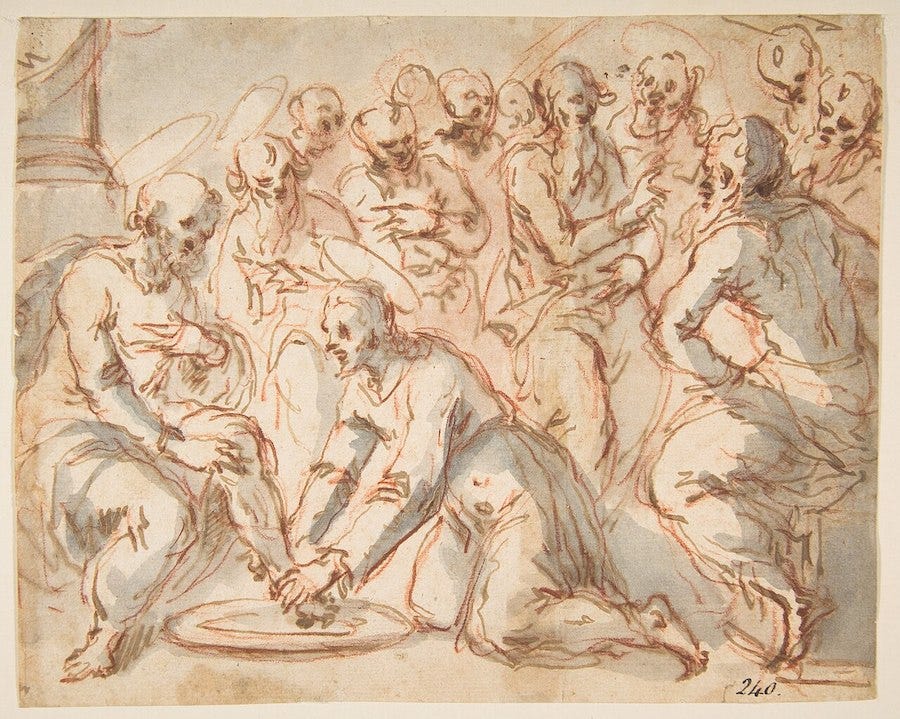
Ray Temmerman reflects on the Eucharist as action: “Jesus is asking his followers to take him more seriously. He is not asking them to physically eat and drink. Instead, he wants them to go deeper, to take the whole of his reality, his life, into them, and be changed by it. That more serious reception of and reflection on who he is can begin immediately, without needing to wait for the institution of Eucharist.”
Michael, in our current world thank you for offering a story about calmness which we all need to embrace. What a great story about Pope Leo.