


This past Sunday, I found myself at Mass at a different parish from the one I normally attend. After finding my place amidst the parishioners, listening to the riches of the readings I had reviewed earlier that week with our small Christian community, a man in the row in front of me suddenly collapsed to the floor.
It happened during the consecration of the gifts. As the priest was praying over them, I saw the shape of the body tilt straight to the ground like a felled tree. It startled everyone, and I let out an audible cry; the man’s wife got down on her knees, while others on the aisles of the nearby pews came forth to help. The priest suspended his consecratory prayer, but I could sense the prayers of those of us in the pews pick up where his left off. Someone called 911. The few people gathered around the man managed to lift him onto the pew. One of them, who clearly had medical knowledge, started feeding him questions to assess his mental state.
“What’s your name?” he asked, leaning over the man while supporting his head from behind.
“Peter,” the man answered. His eyes were open and he appeared alert, if understandably in shock.
Hearing this, my mind flashed to the man’s namesake and his multiple falls: first though the trapdoor of the sea set by his own distrust, and then again figuratively, three times before the cock crowed twice, in denial. There was also his falling prostrate with his brothers James and John at the sight of the transfiguration—a fall at the foretelling of the resurrection.
Gradually the situation stabilized. The animal-like fear in the man’s eyes subsided, his gaze softened, and he gave himself over to focus on his breathing. A bottle of water was procured. From the altar the priest sensed this shift and resumed his place in the liturgy. We filed up to receive the Eucharist, and by the time we returned two paramedics had arrived, summoned by the earlier call to 911. I watched from my place at the center of the pew as one of the paramedics knelt down beside Peter and began speaking to him. I could not make out the words over the dolorous stabs of organ intoning the communion hymn, but it didn’t matter: I glimpsed the face of the gospel in the way the medic attended to this perfect stranger, nodding to him, holding eye contact with humane concern.
Magnifica Humanitas is as valuable for the questions it puts on offer as for the provisional solutions, grounded in a renewed catechesis of Catholic social teaching, that it suggests. Throughout the whole of the encyclical, between the paragraphs and behind the words, one feels the presence of an animating question: What makes humanity magnificent? Rightly framed as a response to the crisis-opportunity of artificial intelligence, Pope Leo’s document actually goes much further, forcing us to reconsider who we are, how we think, and how we serve each other in a time when the frictionless cognition of the machine is vying, however improbably, with the “concrete forms of human coexistence” (153) that have been the bedrock and base standard of our species for millennia.
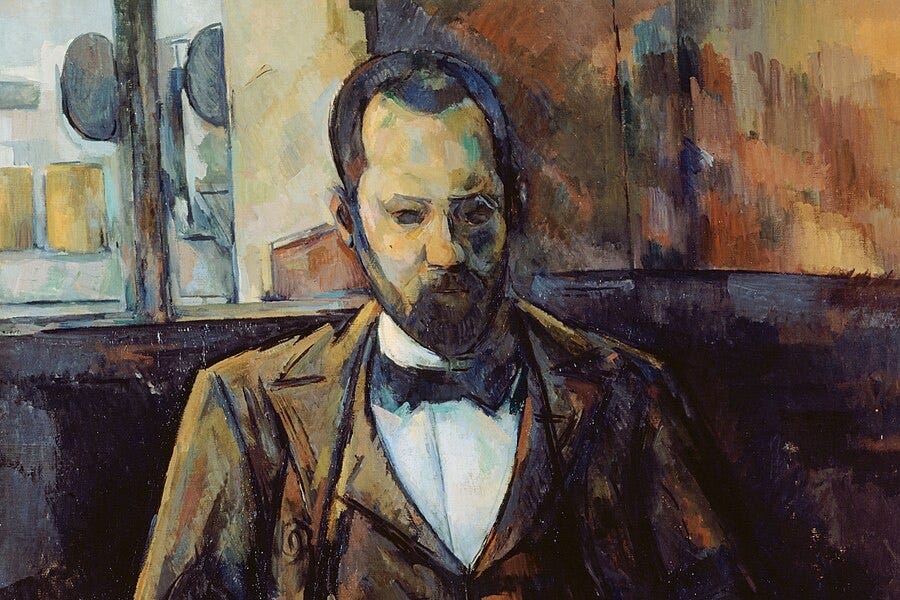
“Even when machines excel in efficiency, a human face that asks to be gazed upon remains the center of our history,” Leo writes (233). I thought of this line throughout the week as I recalled the events of Sunday, the way the medic took in the face of the felled man, Samaritan-like, registering each nuance of response, seeking little openings in consciousness to make contact. How different this contact is than the cold and clinical tools of “facial recognition” software promulgated by machine—those tools used to scan and surveil (and to discipline and punish), where the face is reduced to a series of vectors and planes. Cézanne reduced faces to vectors and planes, too, the difference being that he did this to give them a second life in paint, whereas the machine only extrapolates data. In this the face becomes no more than another extractive site, one more to add to the catalogue of cobalt mines, oil wells, and gas pipelines scarring the earth with our endless appetites.
Like a kind of mirror—an image Matthew Milliner uses to beautiful effect in an essay from earlier this year—this moment of technological transition offers us a way, or really an imperative, to reassess those words and concepts that have grown stale from overuse: words like transcendence and magnificence and human dignity that are somehow innate to us but which we’ve consistently handed over in the name of efficiency, progress, and growth. The way back to the center begins with the face, the point of contact that breaks the cycle of estrangement from ourselves.
Michael Centore
Editor, Tomorrow’s American Catholic
Take the Log out of Your Own Eye
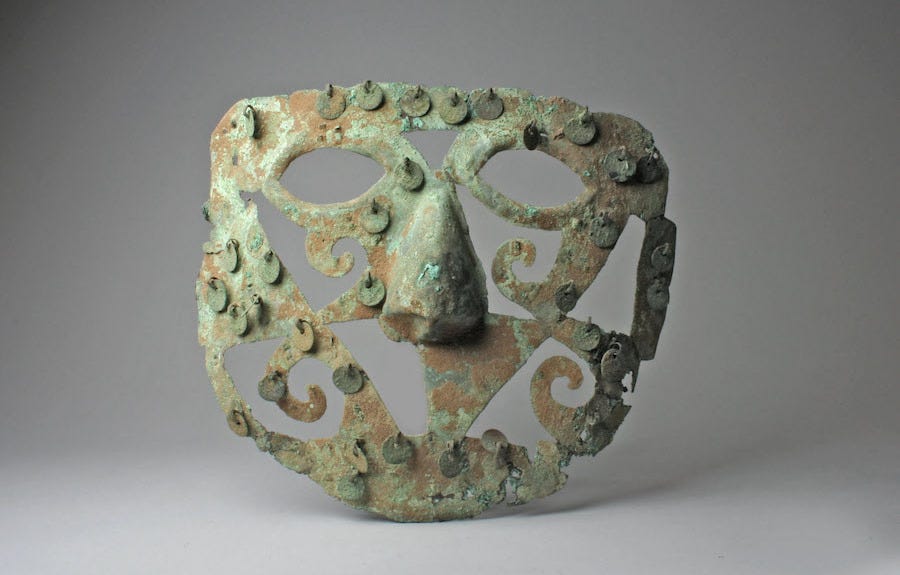
Patrick Carolan on guarding against the sin of hypocrisy: “In the Gospels, Jesus condemns the sin of hypocrisy more consistently and forcefully than any other. He frequently criticizes religious leaders who appear outwardly holy but lack sincerity and a hunger for justice within . . . Unless and until we join together as one people speaking out and challenging instances of hypocrisy like Jesus did, we will never uphold each other as ‘mirrors of Christ’ and create the kingdom of heaven here on Earth.”
Read more »
The Poor You Will Always Have with You

William Droel on how Michael Harrington, Rev. William Barber II, and Pope Leo XIV have exposed the “invisibility” of poverty: “Barber, too, says that poverty is invisible. ‘It is hidden from us by forces we do not understand,’ he explains. Society assumes that anyone who is working cannot be poor, even if the job is hawking wares on a street corner or maneuvering a ride-share vehicle or taking orders in a diner. So, the assumption continues, a truly poor person must be ‘lazy or suffering the consequences of their own choices.’ Society, Barber says, blames poverty on the poor.”
Read more »
The Heat of Renewing Life

John Zedolik shares two new poems, “Revealed Hope” and “Natural Catechism”:
“The heat lightning illuminates
the underbelly of God, you see?
sleek and iridescent as a pearl
who let us in on her secrets
behind these diaphanous curves
that counterfeit the day’s light
for a sharp instant . . .”Read more »
Flipping the Tables
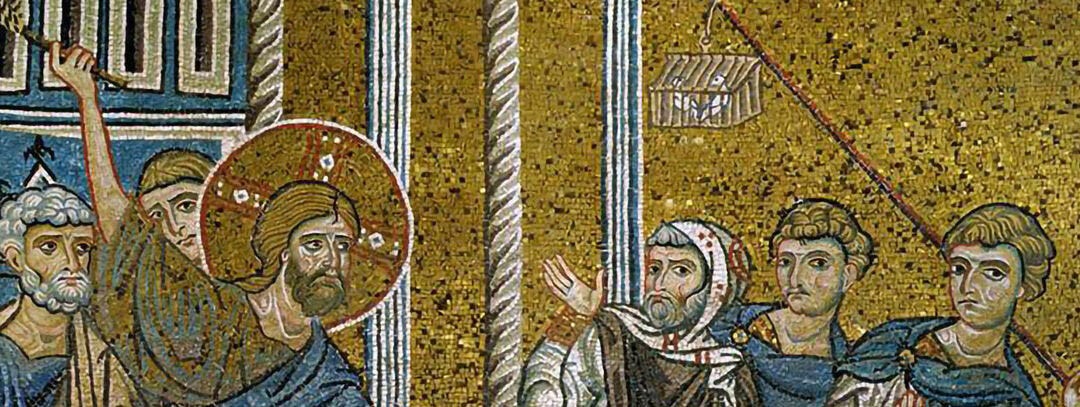
Three new episodes of Flipping the Tables, a podcast about Catholics working for peace and justice hosted by journalist, activist, and author Colleen Shaddox, are now available. Join Colleen as she speaks with Marianne Comfort, justice director for the Sisters of Mercy of the Americas, about extractive industries that harm the environment and increase inequity; activist Karen Dear of the NC Cabrini Collaborative about Catholic social teaching on immigration; and Sr. Sally Duffy about how Ohio’s religious women are advocating for Haitian immigrants who have endured racist slander and now face danger with the end of Temporary Protected Status. You can find complete episodes as well as additional resources and ways to get involved at the Flipping the Tables website.
Transforming Together: A Franciscan Initiative
Human beings are at war across the globe. Children are being trafficked and people are dying from starvation and disease. We often feel hopeless and ask the question: What can we do?
We all have a story to tell, and as storytellers, we have the opportunity to help create a culture of kind-heartedness and understanding. We have often heard it said that you can’t hate someone once you’ve heard their story. Some of the most powerful stories of peace and reconciliation are those written in the lives of the ordinary people doing the patient work of rebuilding communities.
In collaboration with the Franciscan Month initiative and other Franciscan organizations, Tomorrow’s American Catholic is inaugurating a project to collect those stories. Our goal is to publish several during Franciscan Month in October and continue sharing them throughout the year. We are also thinking about the possibility of compiling these stories for a book, so as to have a written record of people transforming together.
We welcome submissions in the range of 500 to 600 words that answer the question: How does your understanding and practice of Franciscan spirituality guide you in your everyday life, including your approaches to faith, family, community, justice, and peace? For further information or to submit a story, contact us at editor@tomorrowsamericancatholic.org.