


Scroll down for our latest offerings this week, including:
“Cardinal Tobin and executive director of NETWORK speak on National Faith Call to Action”
“Poetry and the Trinity,” a reflection for Sunday of the Word of God
Amid the chaos, disorder, and violence of the past several months, it is worth taking a moment to track how the US episcopate has responded.
First, in November, came the “Special Message” on immigration from the US Conference of Catholic Bishops (USCCB). Passing overwhelmingly by a vote of 216 to 5 (with 3 abstentions) at their plenary assembly in Baltimore, the short text studded with scriptural citations laments “a climate of fear and anxiety around questions of profiling and immigration enforcement” and “the state of contemporary debate and the vilification of immigrants.”
In December, Archbishop Timothy P. Broglio of the US Archdiocese for the Military Services issued a statement on the extrajudicial killings of suspected drug smugglers in the Caribbean Sea and eastern Pacific. “As the moral principle forbidding the intentional killing of noncombatants is inviolable,” the statement read in part, “it would be an illegal and immoral order to kill deliberately survivors on a vessel who pose no immediate lethal threat to our armed forces.”
Earlier this month, Broglio followed up with comments in a BBC interview where he said that it would be “morally acceptable” for US soldiers to disobey orders to invade Greenland “within the realm of their own conscience”. The proposed attack on the semiautonomous territory of Denmark, a NATO ally, “tarnishes the image of the United States in our world” and “is certainly very difficult to justify,” he added.
The day after Broglio’s interview, Cardinal Blase J. Cupich, archbishop of Chicago, Cardinal Robert McElroy, archbishop of Washington, and Cardinal Joseph W. Tobin, C.Ss.R., archbishop of Newark, issued their joint statement, “Charting a Moral Vision of an American Foreign Policy.” The cardinals warned that “Our nation’s debate on the moral foundation for American policy is beset by polarization, partisanship, and narrow economic and social interests” and proclaimed “that military action must be seen only as a last resort in extreme situations, not a normal instrument of national policy.”
On Sunday, Tobin spoke out forcefully against Immigration and Customs Enforcement (ICE) violence in Minneapolis and elsewhere on the National Faith Call to Action. And on Wednesday, Bishop Mark Seitz of the Diocese of El Paso called the ongoing immigration crackdown a “total disregard for fundamental human rights” in an interview with the National Catholic Reporter. “We need to come to grips with the fact that a child who is an immigrant, or an adult, or an elderly person who is an immigrant, is facing, at the very least, indirect threats to their very life,” he said.
Perhaps picking up on the tenor of his brother bishops, Archbishop Paul S. Coakley, president of the USCCB, has recently called for clergy across the United States “to offer a Holy Hour for Peace in the days ahead.” In his reflection accompanying the invitation, Coakley characterized recent killings by immigration enforcement officers in Minneapolis and Texas as “just a few of the tragic examples of the violence that represent failures in our society to respect the dignity of every human life.” He issued a stern rebuke to our self-proclaimed Christian nation: “The current climate of fear and polarization, which thrives when human dignity is disregarded, does not meet the standard set by Christ in the Gospel.”
After a generation spent separating out anti-abortion initiatives from the rest of the pro-life program, it would seem that the bishops are finally beginning to speak univocally about the full demands of our faith: one that exemplifies a “civic courage” by challenging the presumptions of worldly power and remembering, as Coakley reminds us, that “no work of mercy or act of justice is ever wasted in the eyes of God.”
Michael Centore
Editor, Tomorrow’s American Catholic
Cardinal Tobin and executive director of NETWORK speak on National Faith Call to Action
Cardinal Joseph W. Tobin, C.Ss.R., archbishop of Newark, and Laurie Carafone, the executive director of NETWORK Lobby for Catholic Social Justice, were both featured speakers on the National Faith Call to Action on Sunday evening.
The interfaith call assembled over 15 speakers representing Jewish, Muslim, and Buddhist communities, along with several Christian denominations. Over 8,000 people were on the call, which was transmitted live via Zoom and Facebook.
The call was hosted by Faith in Action, a global organization focused on faith-based community organizing, and cosponsored by other organizations including NETWORK and the Latino Christian National Network.
Read more »
From Mission Fields to Mission Partners
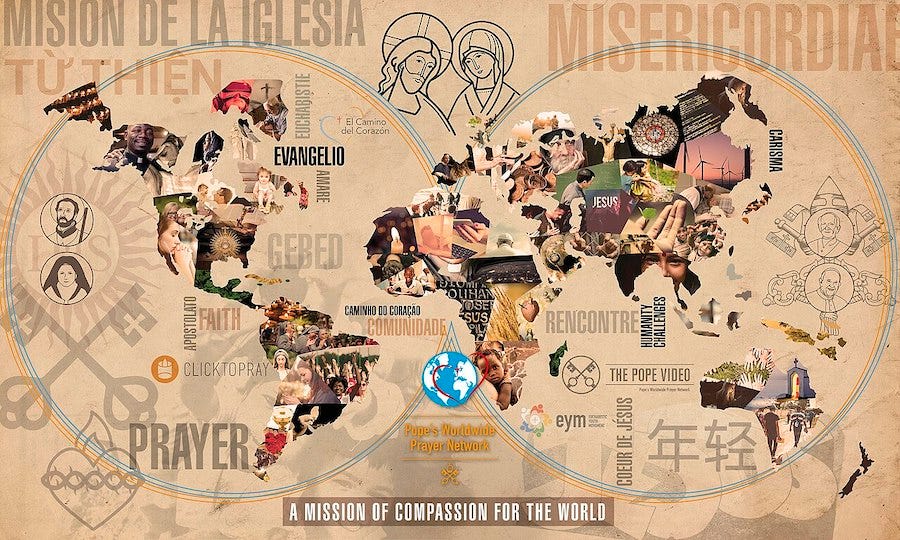
Fr. Cornelius Uchenna Okeke on “a theology of reciprocal mission”: “Much of the Christian West now faces a severe pastoral and vocational crisis. Declining Mass attendance; parish closures, clusters, and merging; and diminishing religious communities are no longer isolated phenomena but structural realities. These developments, which so concerned Saint John Paul II and Pope Benedict XVI, have compelled dioceses and religious institutes in North America and Europe to seek new sources of missionary vitality.
“In the providence of God, that vitality has come, in large measure, through priests and religious from Africa, Asia, and Latin America. Their presence in parishes, hospitals, universities, and chaplaincies is not simply a pragmatic solution to personnel shortages. It is a theological event—a concrete expression of the church’s catholicity and a visible sign of the Spirit’s work across cultures and histories.”
Read more »
The Desire to Love One Another with Therese LeFever
Therese LeFever has spent a lifetime in the service of others: as a mom, an educator, in parish ministry, religious education, and as a social activist. She is program director at the Burroughs Community Center in Bridgeport, Connecticut, where she leads programs such as Our Woven Community. Our Woven Community provides local resettled refugee women the opportunity to become self-sufficient leaders, empowering them with entrepreneurial skills and economic opportunity. Participants create handbags, scarves, and a variety of other items from locally donated materials combined with fabrics from African countries, symbolizing the weaving of cultures.
In this episode, we speak with Therese about the evolution of her Catholicism throughout the years, the history and mission of the Burroughs Community Center, and how her faith helps her find balance and deepen her calling of bringing care, joy, and support to others.
Listen here »
Poetry and the Trinity
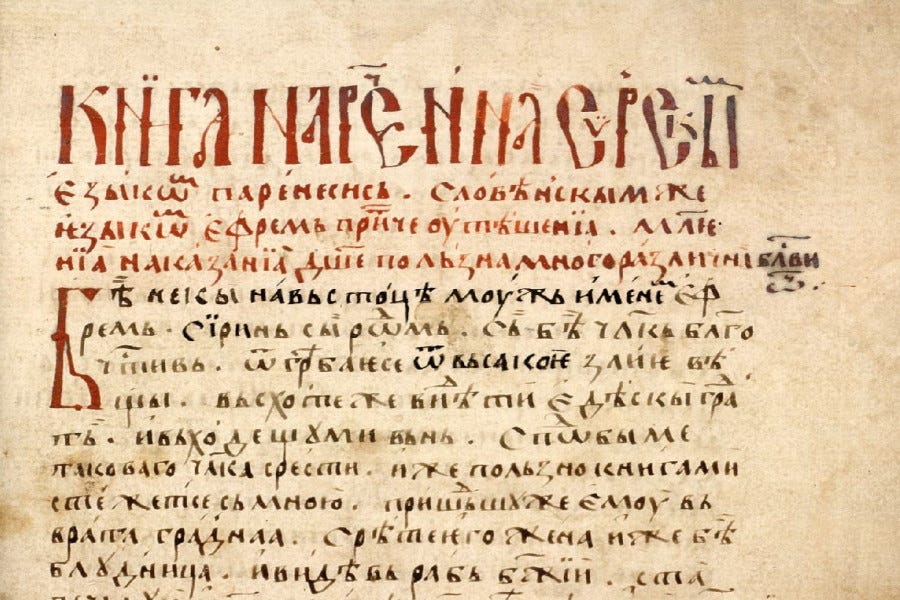
A reflection for Sunday of the Word of God: “The ‘meaning’ of the Word, its theophany, is a poetic revelation, much in the way we come to know the poet through her images, stresses, selections, and cadences: the lineaments of a face in text, which we behold in the icon of the page.”
As usual, nice job!