



Scroll down for our latest offerings this week, including:
Part II of Sarita Melkon Maldjian’s essay “The Oppression of Women in Patriarchal Institutions”
“A Jesuit Greeting for Eid al-Fitr” by Joseph Victor Edwin, SJ
Our latest podcast with Mike Matteuzzi, founder of the organization Contemporary Spirituality
In case you missed it, see also our coverage of Dr. Amy-Jill Levine’s lecture for the Hartford International University for Religion and Peace and Sr. Lou Ella Hickman’s poem aligned with Catholic Sisters Week earlier this month. I’m also pleased to share this review of Danish novelist Henrik Pontoppidan’s The White Bear in America magazine—Ed.
Recording an episode of our Tomorrow’s American Catholic podcast earlier this week, I inadvertently referred to an “interregnum” period of the Synod on Synodality—a hiatus between the official closing of the second session on October 2024 and the church-wide Ecclesial Assembly planned for 2028.
That framing isn’t quite accurate, as a three-year reception and implementation phase has steadily continued with the Jubilee of Synodal Teams and Participatory Bodies last October (readers might remember Patricia E. Clement’s on-the-ground reporting from that event) along with the ongoing release of the final reports from the Synod’s multiple working groups.
Earlier this week, the latest report from Study Group #2, tasked with the theme “To Hear the Cry of the Earth and the Cry of the Poor,” was issued by the General Secretariat. The document takes up five separate questions to examine the “two-fold love” of personal devotion and social works of mercy, and how that love manifests itself in listening to the entwined cries of the earth and the poor.
In the preamble to the document, Cardinal Michael Czerny, SJ, prefect of the Dicastery for Promoting Integral Human Development, distinguishes listening from mere “hearing” and characterizes it as “a whole over-arching, faith-based process.”
“Listening can only really happen in reality, at the concrete level, close to the ground,” he writes. It is heartening to see the cardinal include “all sorts of BECs [Base Ecclesial Communities], SCCs [Small Christian Communities], ecclesial communities and movements” among those in the church who “are already doing good Christian listening to the poor and to the earth.”
In their opening section on the Study Group’s methodology, the authors state “that the importance of listening to the cry of the earth is now generally accepted but we received little material [from surveys conducted by the group] describing how such listening might take place.” The acknowledgment reads to me like an invitation to fill this gap, to develop what the document calls in a separate section “ecological lenses” for the practice of social ministry. The authors provide one potential direction when they encourage the use of the Mass for the Care of Creation approved by Pope Leo XIV last year.
Drawing on Pope Francis’s encyclical Fratelli Tutti, the report promotes the idea of “political love” as “one of the highest forms of charity.” The authors affirm Francis’s teaching that “the Gospel has a political dimension: to transform the social, including religious, mindset of the people.” To this end, they advocate for a church that includes within its conception of charity “the public denunciation of injustices and proposals for systemic change towards social and ecological justice.”
One of the more exciting through-lines of the document is the recurring notion of a “synodal theology” or “community-based theology” that is “contextual, intercultural, transdisciplinary, ecclesial, and rooted in the Word of God.” The authors’ recommendation that theologians “meet face-to-face with communities pushed to the margins for mutual learning” is an excellent template for facilitating that “torrent of moral energy” Pope Leo called forth in Dilexi te. This recommendation is followed by a beautiful image that is itself an example of the authors’ invitation “to make theological language more relevant and to thoughtfully highlight the faith expressions of people made poor”:
Theologians are invited to recognize themselves as active participants and members of, ecclesial communities. In this way, their questions can more naturally arise from the life of communities. The wisdom and knowledge of all members of the People of God, in light of the sensus fidei and living Tradition of the Church, should echo through every thread of theology, woven as a tapestry by many hands.
Michael Centore
Editor, Tomorrow’s American Catholic
The Demands of Followership
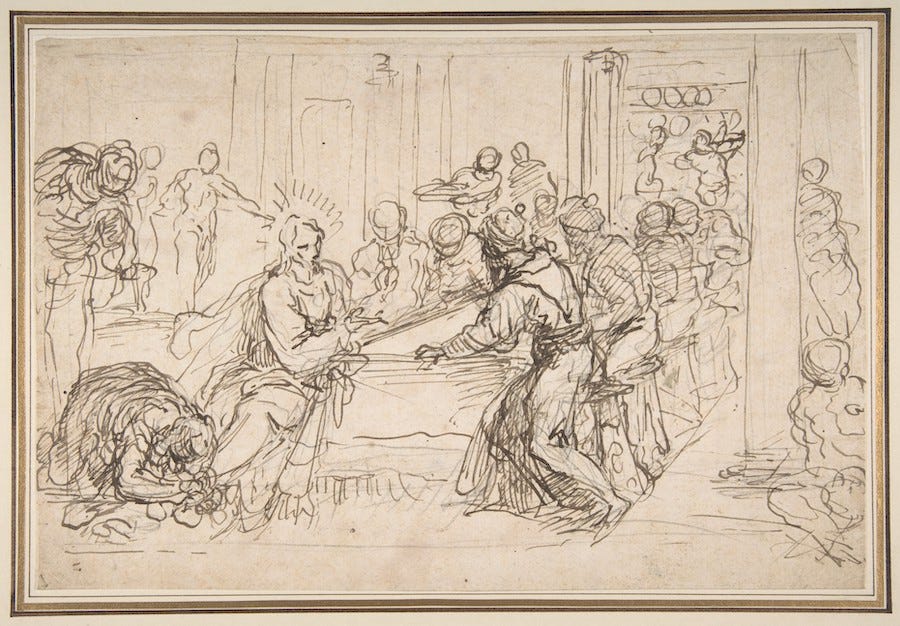
Sarita Melkon Maldjian explores how women in the gospels exemplify the roles of prophet and disciple: “The anointing woman receives a unique and striking accolade of praise from Jesus after her deed is done. If we keep the idea of Mark’s ‘Messianic Secret’ and his portrayal of the twelve failed male disciples in mind, she wins the prize for recognizing Jesus as the Messiah and for showing an overt display of discipleship that not one disciple has managed to supersede thus far in the gospel. As John Dominic Crossan observes, ‘The disciples have never, as Mark sees it, understood or accepted Jesus’ impending crucifixion. But now, in the home of Simon the Leper, for the first time somebody believes that Jesus is going to die and that unless his body is anointed now, it never will be.’”
Read more »
A Jesuit Greeting for Eid al-Fitr
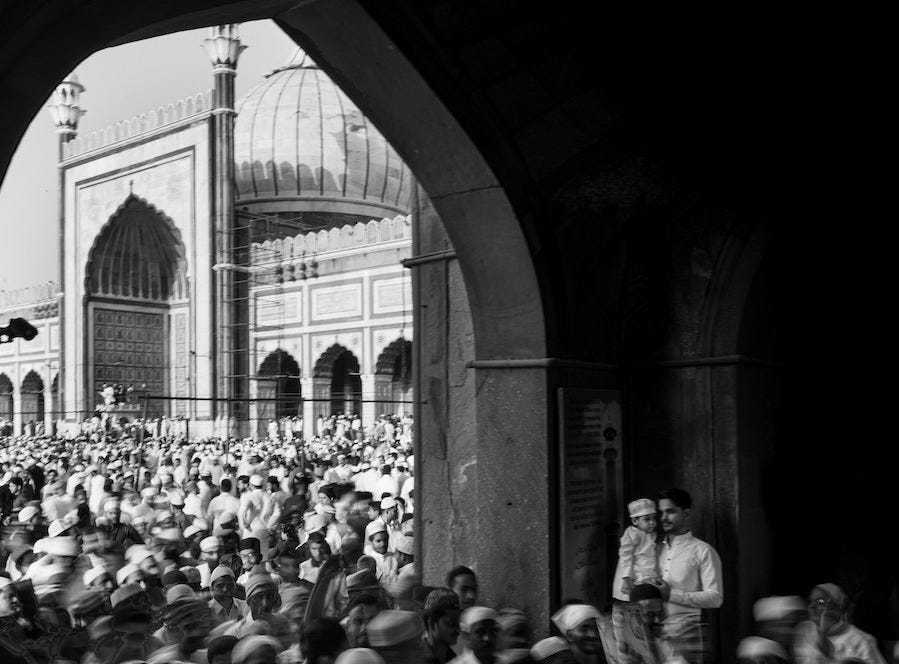
A message from Joseph Victor Edwin, SJ, coordinator of Jesuits Among Muslims in Asia (JAMIA) and secretary of the Islamic Studies Association (ISA) at the Vidyajyoti Institute of Religious Studies in New Delhi, India: “Nostra Aetate clearly states that ‘the Church rejects nothing true and holy in (other) religions’ and promotes interreligious dialogue. While addressing Islam, the document expresses the church’s ‘esteem’ for Muslims and identifies several commonalities that Islam and Christianity share in common, including belief in Almighty God who is merciful Creator and Revealer.”
Read more »
The Silent Pilgrimage to God
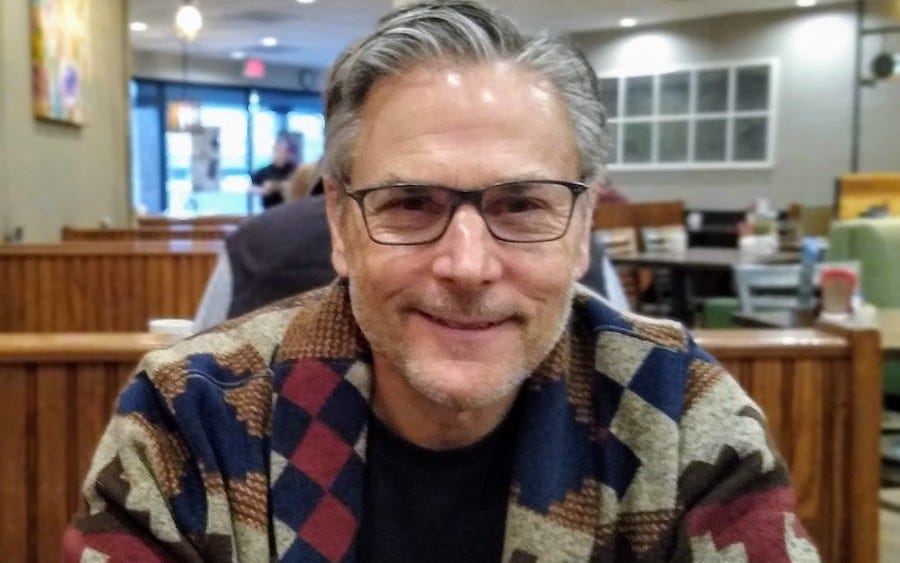
Mike Matteuzzi is the founder of Contemporary Spirituality, an organization dedicated to connecting sincere seekers with the wisdom teachings of the world’s religions. Contemporary Spirituality offers “something more for sincere seekers” through in-person and online programming. It seeks to build a supportive community that emphasizes commitment to a regular contemplative practice while assisting participants in discerning their unique call.
In this episode, we speak with Mike about his background and early experience in an intentional Christian community, his awakening to the “spaciousness” of contemplative spirituality, and how he lives out the calling of “entering the cosmic dance” in his day-to-day life and work with his organization. We also look at how his understanding of the church has evolved throughout his journey, the limitations and invitations of “cultural Catholicism,” and the ways in which the role of the church “is to embrace so as to redeem and not to exclude so as to purify.”
Listen here »
The Laborer Question
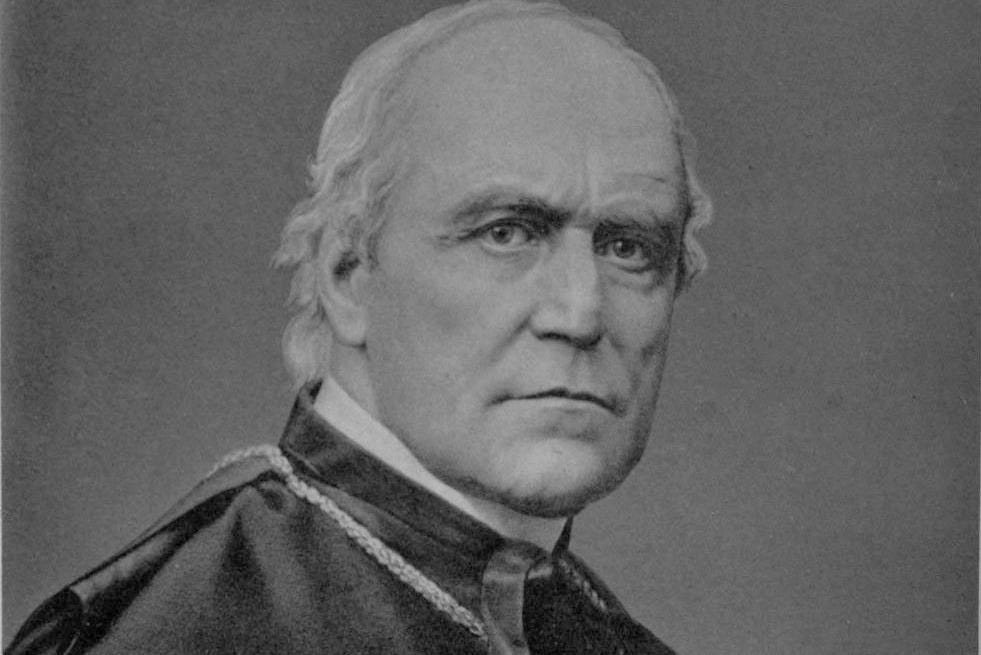
William Droel on an influential figure in the Catholic labor movement: “Although Leo XIII is credited as the pioneer of modern Catholic social thought, he was not the first. For example, Bishop Wilhelm Emmanuel von Ketteler (1811–1877) of Mainz was an outstanding social, political, and spiritual leader of the 19th century. In highlighting concepts such the common good, employees as stakeholders, and solidarity, he laid the groundwork for a mature Catholic reflection on modernity.”
Read more »
Event Notice: “Opening Doors Already Unlocked: Creating Space to Recognize and Support Women’s Voices and Leadership”
April 22, 1:00 p.m. (Eastern time)
Join the Association of US Catholic Priests (AUSCP) Women in the Church Working Group on April 22 at 1:00 p.m. ET for a 90-minute online gathering of women and priests. The program will include brief testimonies, a guided Lectio Divina, Conversations in the Spirit, and a Q&A. Grounded in the Synod’s call for “full implementation of opportunities” and AUSCP’s mission of compassionate, collegial accompaniment, this event creates a respectful space for listening, shared witness, and pastoral imagination about women’s leadership in parish life.
A newly released Final Report from Study Group 5 (3-10-26) calls for the creation of “new spaces” for women in diocesan governance and decision-making, stating that their inclusion is not a concession but a requirement for the Church’s mission. This webinar will explore concrete proposals illustrated by personal testimonies and audience participation. Join in this timely work to bring into being a Church where leadership is a shared responsibility of the whole People of God.